
 Bunlings: apps de sprint para o Jira





Artigos
Guias práticos para times no Jira: estimativa com planning poker e retrospectivas de sprint (Bunlings). Os demais artigos estão em inglês.
-
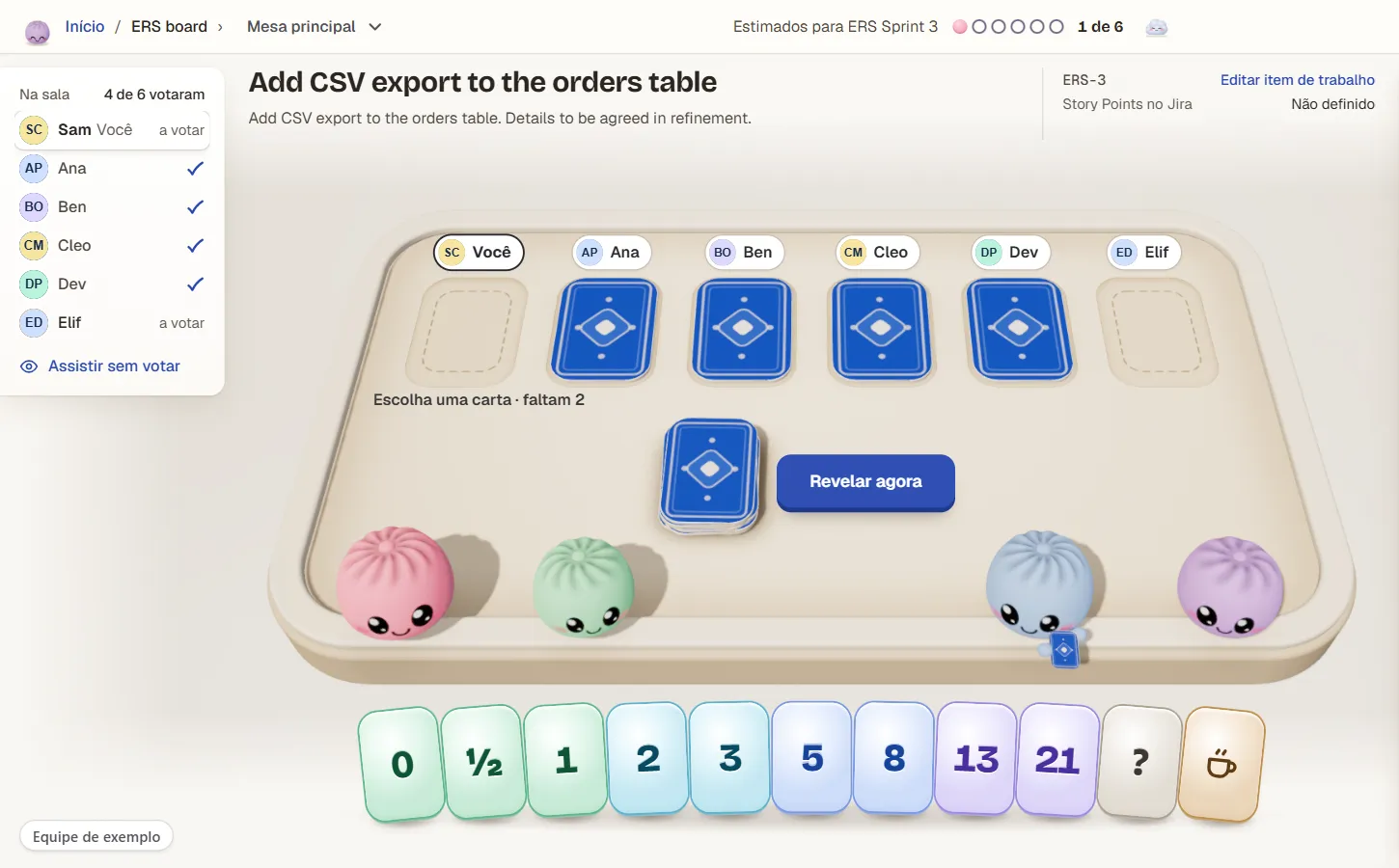 Planning poker: como funciona em 5 passos para a sua primeira rodada Planning poker (scrum poker) como funciona: o que as cartas significam, os cinco passos de uma rodada, o que fazer com votos distantes e com um 21.
-
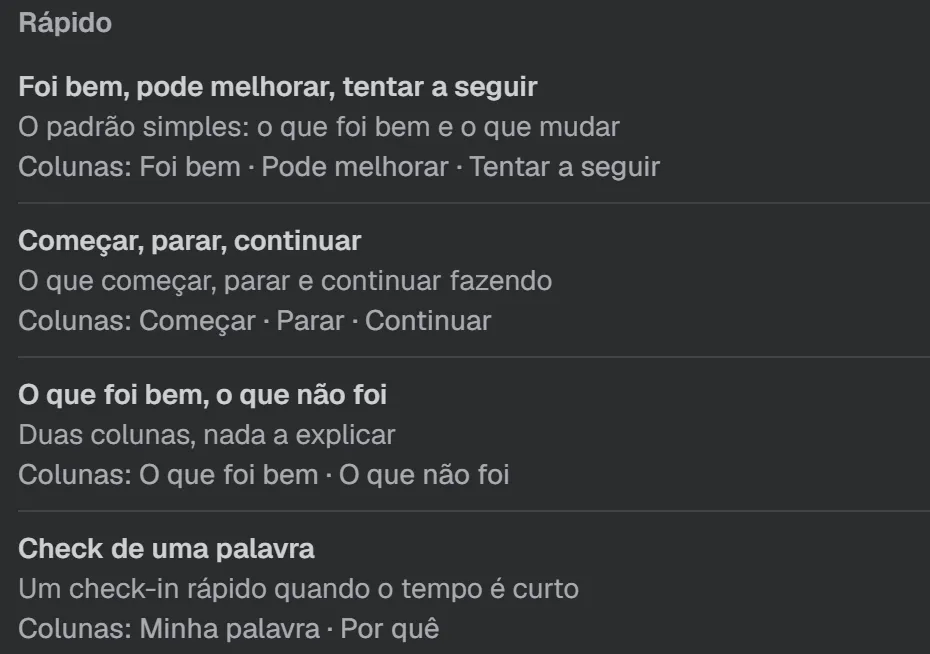 15 formatos de retrospectiva e quando usar cada um 15 dinâmicas de retrospectiva de sprint por situação: rápida, sentimentos e melhoria. O que cada formato pergunta e a sprint em que ele cabe.
-
 30 quebra-gelos para retrospectiva que não dão vergonha alheia 30 quebra-gelos para retrospectiva de sprint por clima, como fazer um em dois minutos e quando pular. Seguros no trabalho, respostas curtas.
-
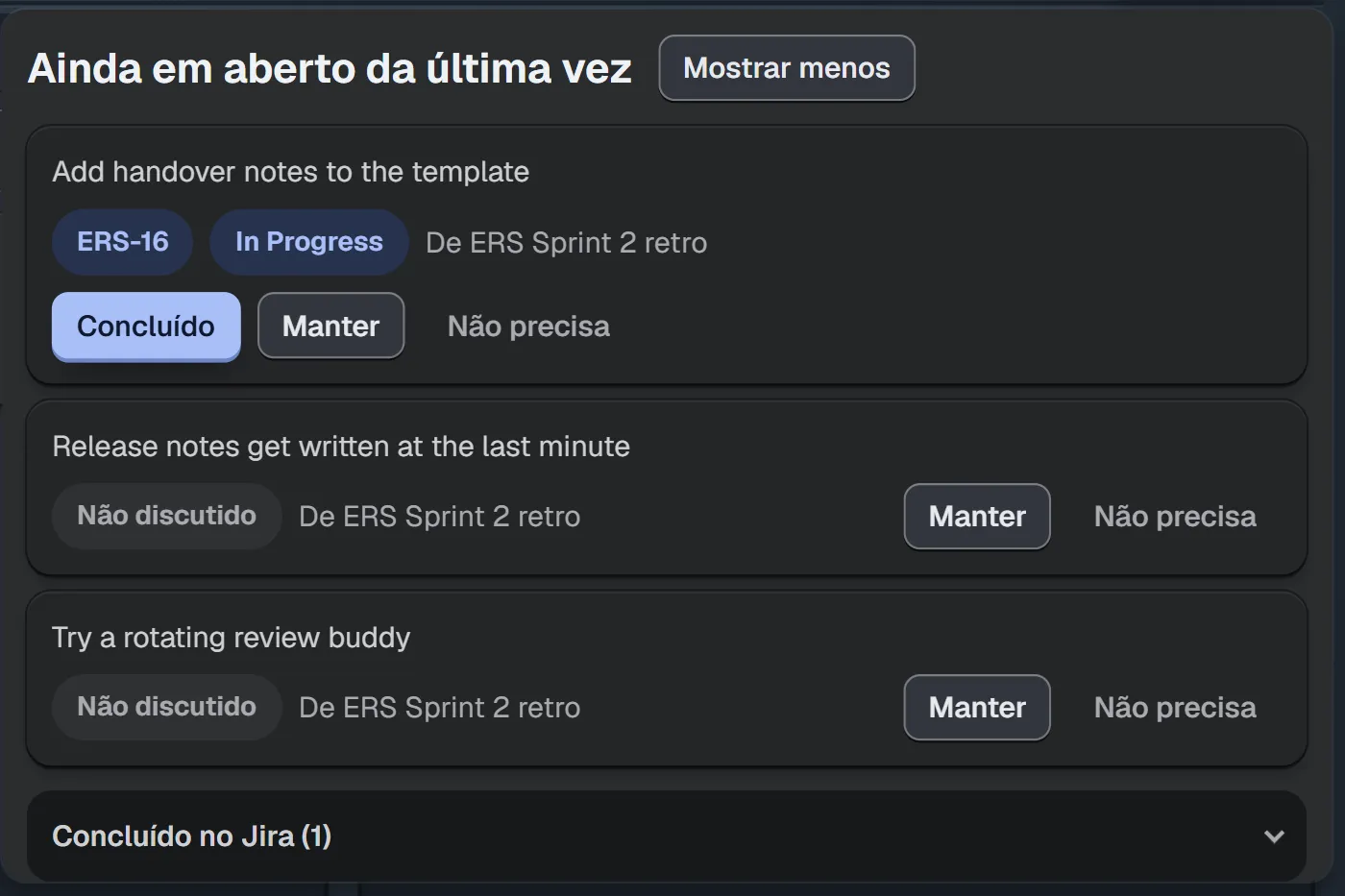
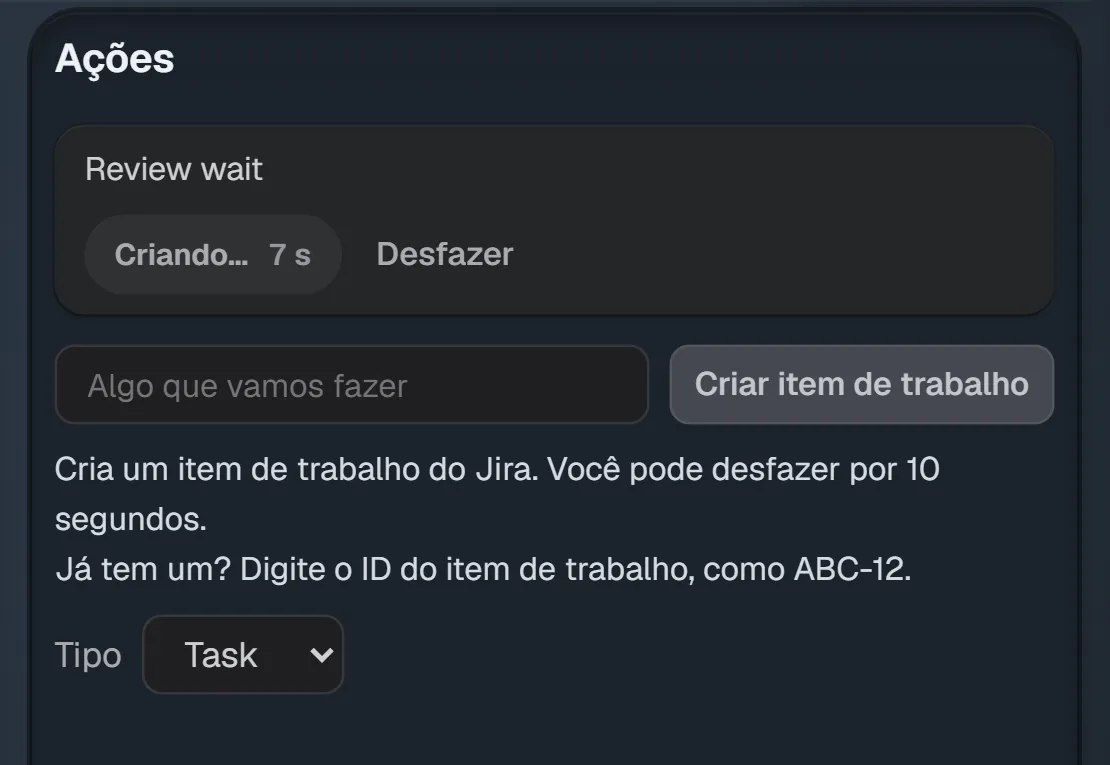 Ações de retrospectiva que realmente saem do papel Por que as ações da retrospectiva travam e como resolver: um responsável, um item de trabalho do Jira e as ações abertas da última vez antes das novas.
-
 Ancoragem na estimativa ágil: o primeiro número vence, e como evitar Alguém diz 8 e, de repente, todo mundo pensa 8. Os vícios de estimativa por trás disso, como reconhecer cada um e como votos ocultos resolvem o pior.
-
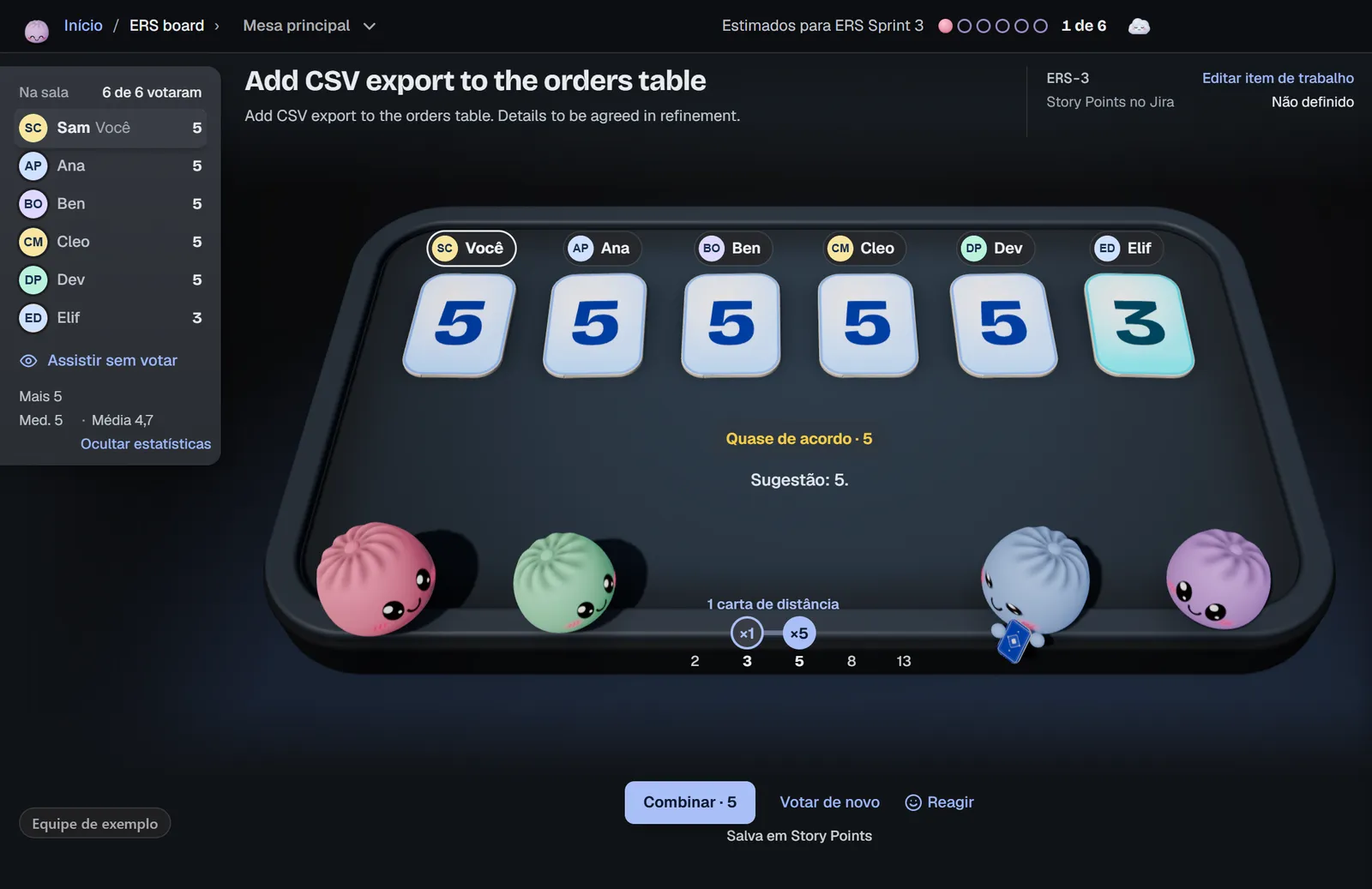 Campo Story Points sumiu no Jira? Descubra o campo que o seu quadro realmente usa Por que o campo Story Points não aparece num item de trabalho do Jira, como espaços gerenciados pela equipe e pela empresa diferem e qual campo seu quadro usa.
-
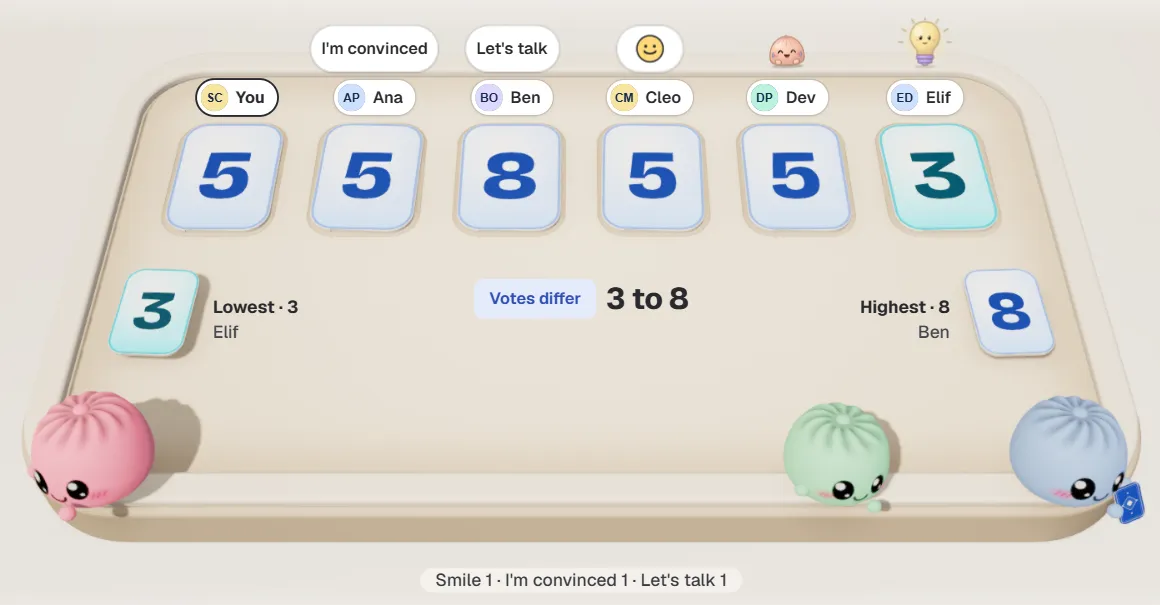 Como deixar as reuniões ágeis divertidas sem ser infantil Reuniões ágeis divertidas põem o humor na situação, nunca numa pessoa, e tudo pode ser desligado. O que ajuda, o que irrita e onde ficam os interruptores.
-
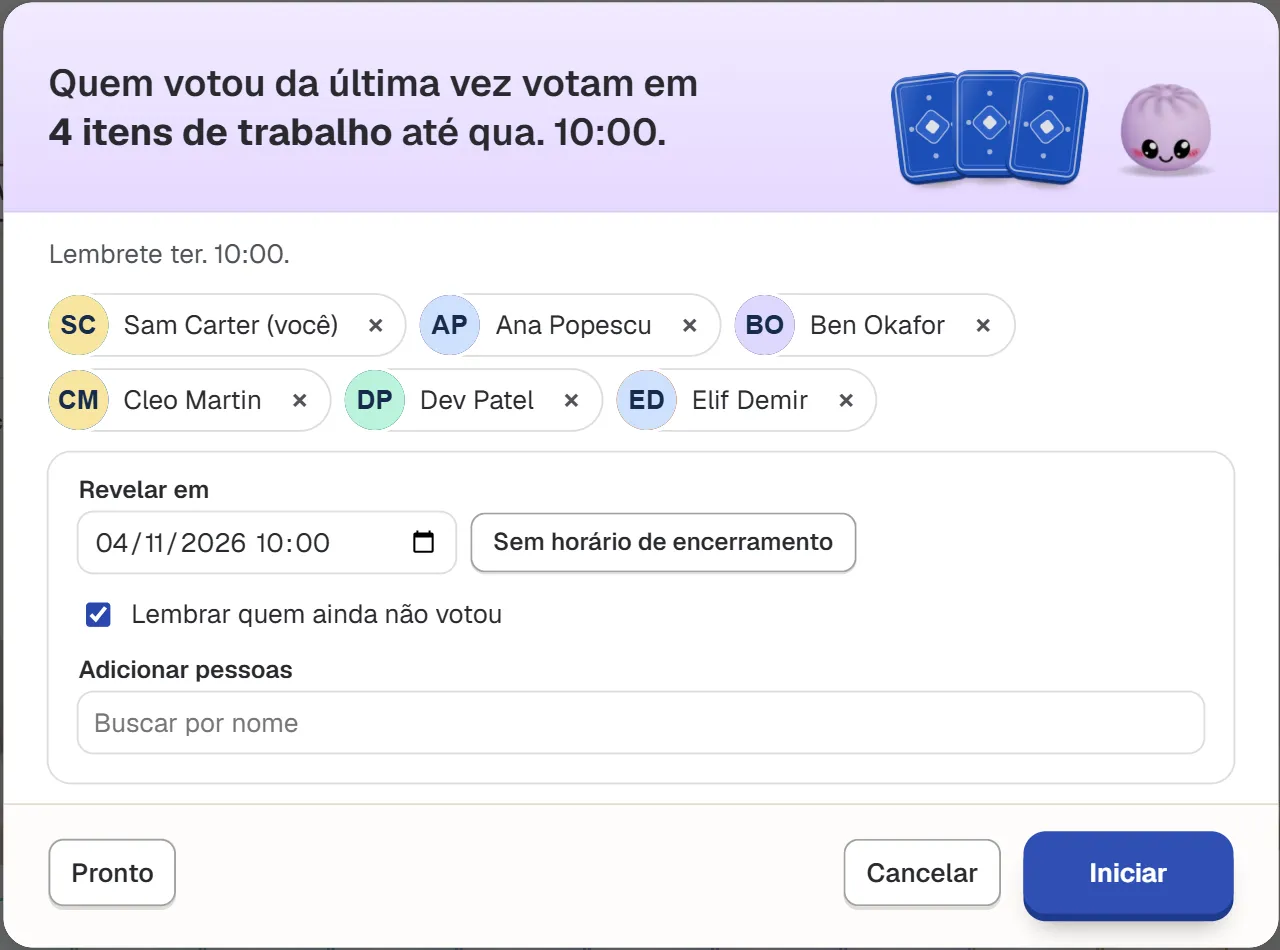 Como estimar sem reunião (e manter os votos honestos) Estimativa assíncrona no Jira para times em fusos diferentes: quem vota, um horário de revelação e votos ocultos até lá. O jeito do Jira puro e o do app.
-
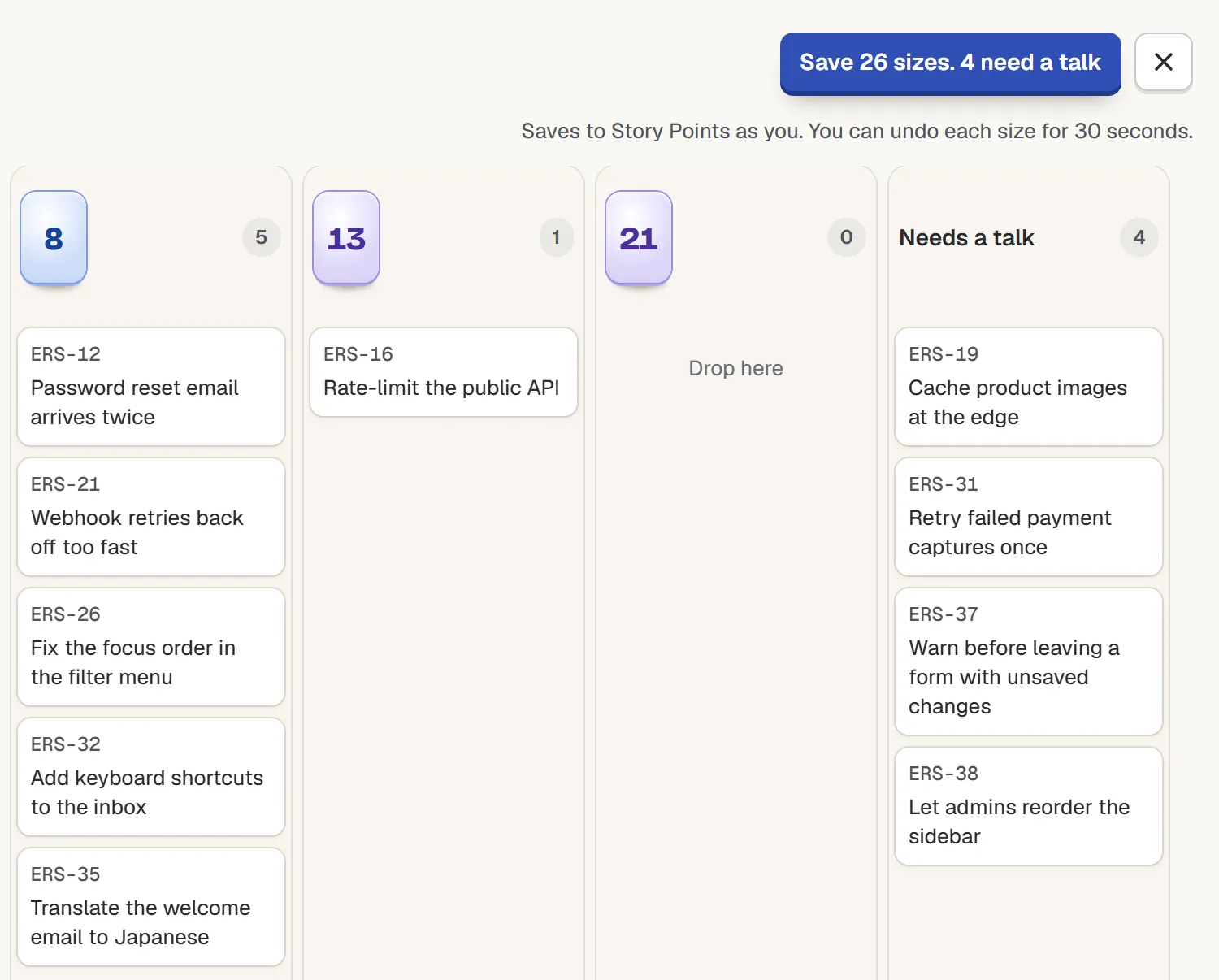 Como estimar um backlog grande em 30 minutos Estimativa ágil de um backlog longo no Jira em 30 minutos: classifiquem os itens por tamanho juntos, conversem só sobre as divergências e salvem o resto.
-
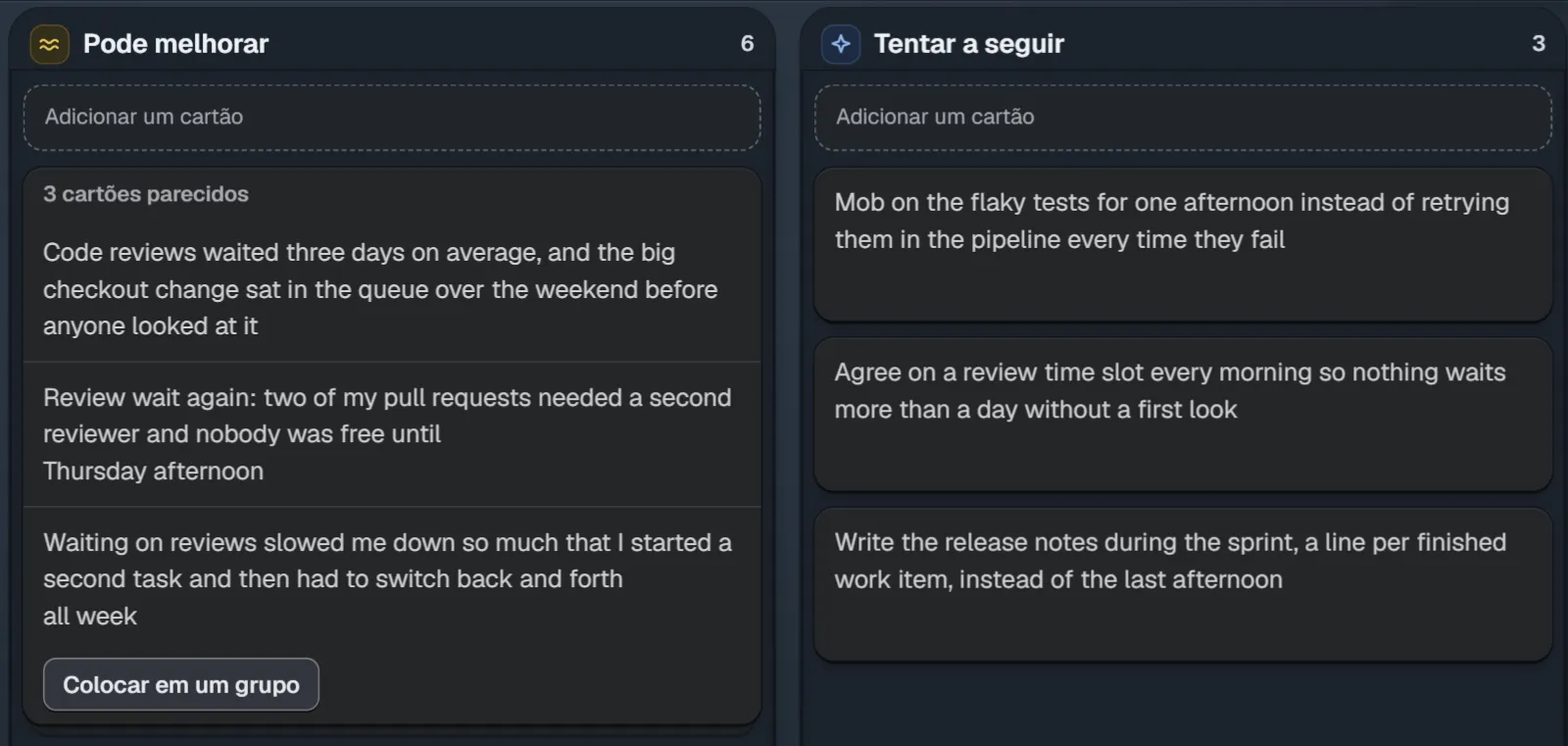 Como fazer uma retrospectiva de sprint em 45 minutos Retrospectiva ágil em 45 minutos: sete blocos com horário de início e linha de chegada, do check-in à votação, às ações e ao encerramento.
- Estimativa de story points no Jira Cloud: o que o Jira faz e o que deixa por sua conta O Jira Cloud guarda uma estimativa em cada item de trabalho, mas não tem votação. Veja como ativar a estimativa, definir story points e o que um app acrescenta.
-
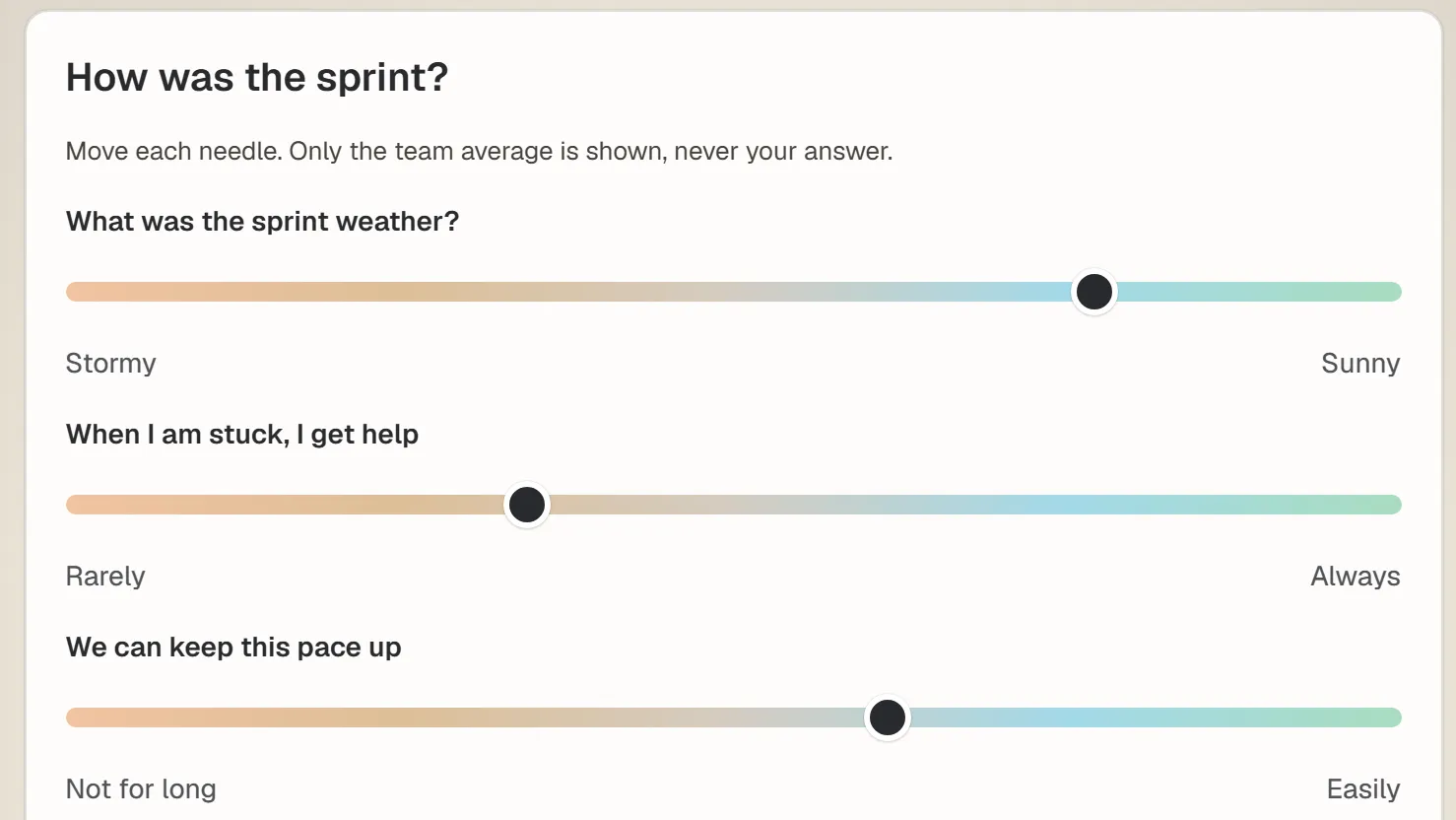 Health check do time na retrospectiva: seis perguntas e o que fazer com as respostas Como fazer um health check do time na retrospectiva da sprint: seis afirmações simples, uma escala, com que frequência perguntar e o que fazer com notas baixas.
-
 Jira nativo vs Bunlings para planning poker e retrospectivas O que o Jira Cloud faz sozinho para estimativa e retrospectivas de sprint, o que o Bunlings acrescenta dentro do Jira e quando o Jira nativo é a melhor escolha.
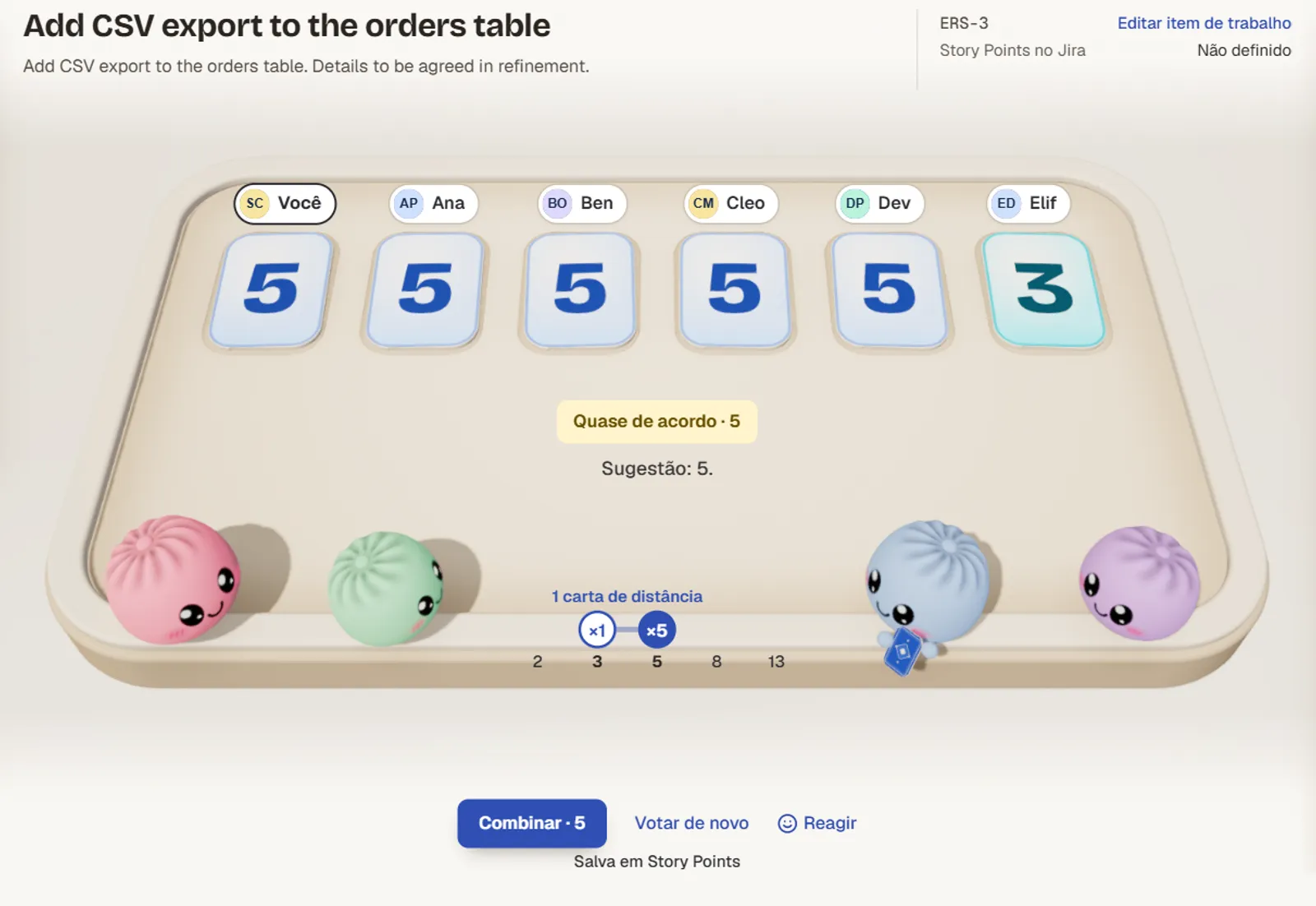
- Planning poker no Jira: como fazer uma rodada sem sair do Jira Como fazer planning poker (scrum poker) no Jira: abra uma sala pela sprint, vote em segredo, vire as cartas juntos e salve o número no campo de estimativa.
-
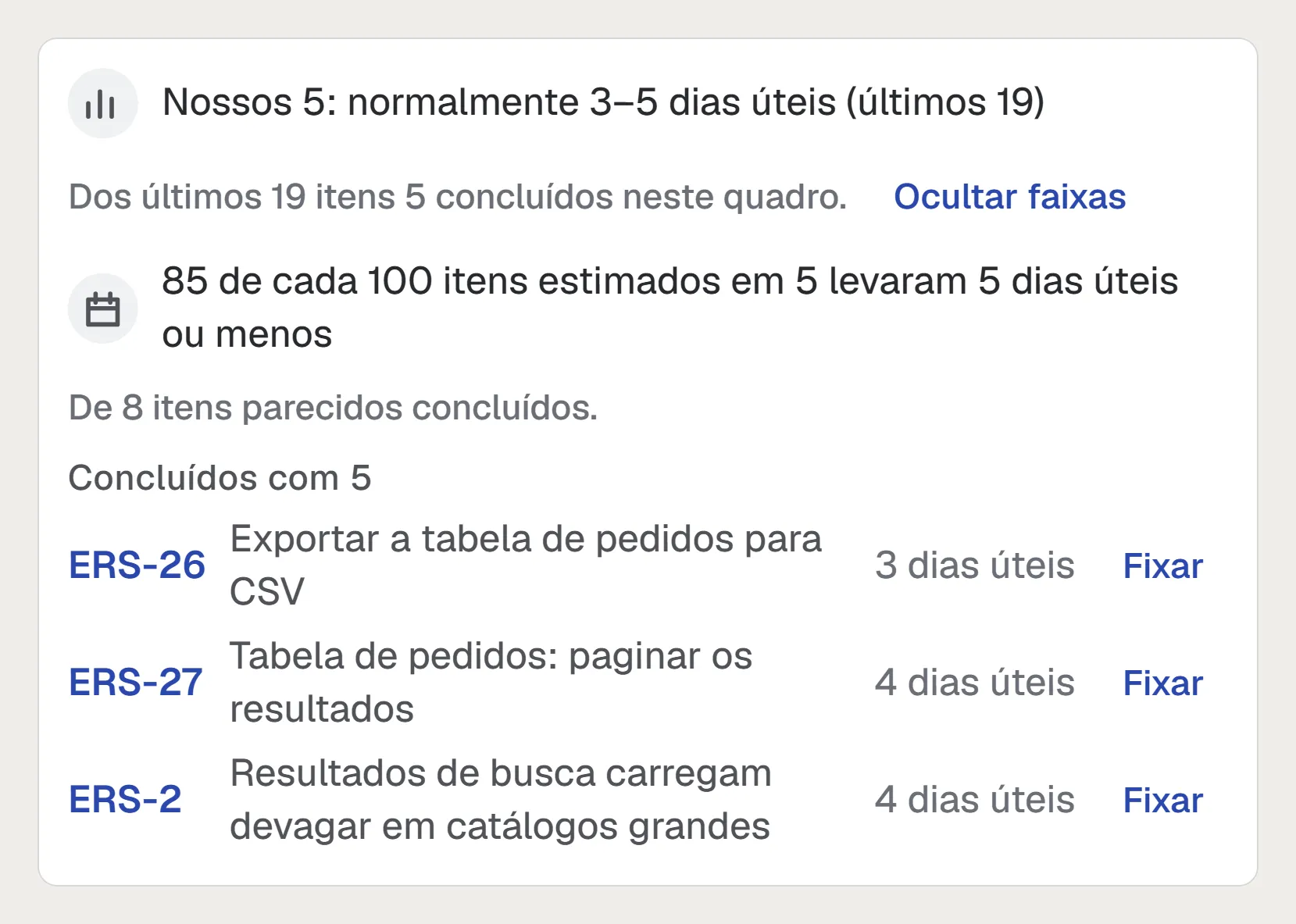 Por que as nossas estimativas sempre erram? O que o seu próprio histórico mostra Estimativas derrapam quando ninguém confere quanto um 5 levou. Por que isso acontece no Jira e uma checagem de dez minutos por sprint para ver o que o 5 levou.
-
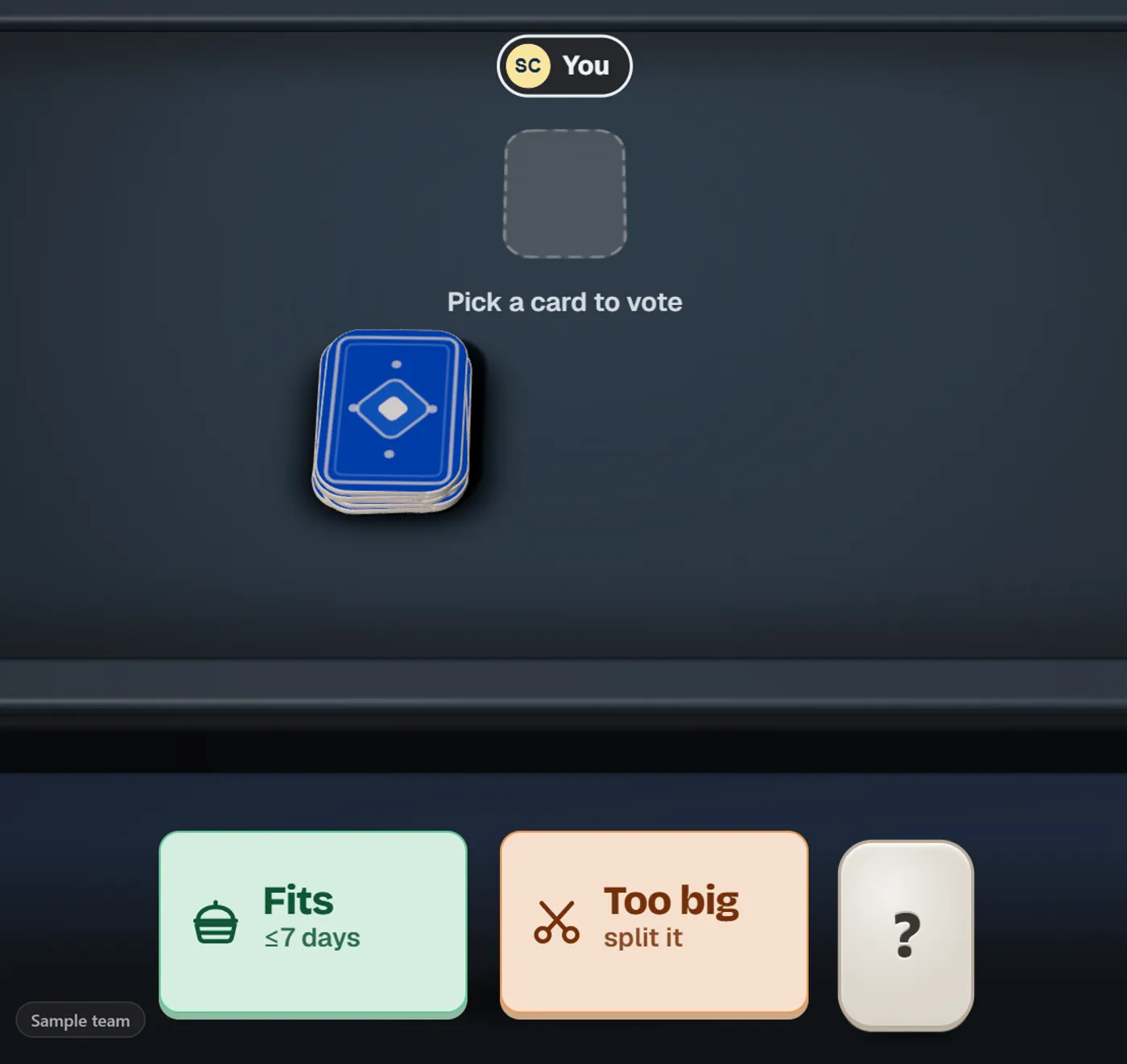 Previsão no Kanban no Jira: datas de entrega sem story points Conte os itens de trabalho que o time conclui por semana, repita essas semanas e responda com um intervalo, não uma data. Sem story points, em qualquer Kanban.
-
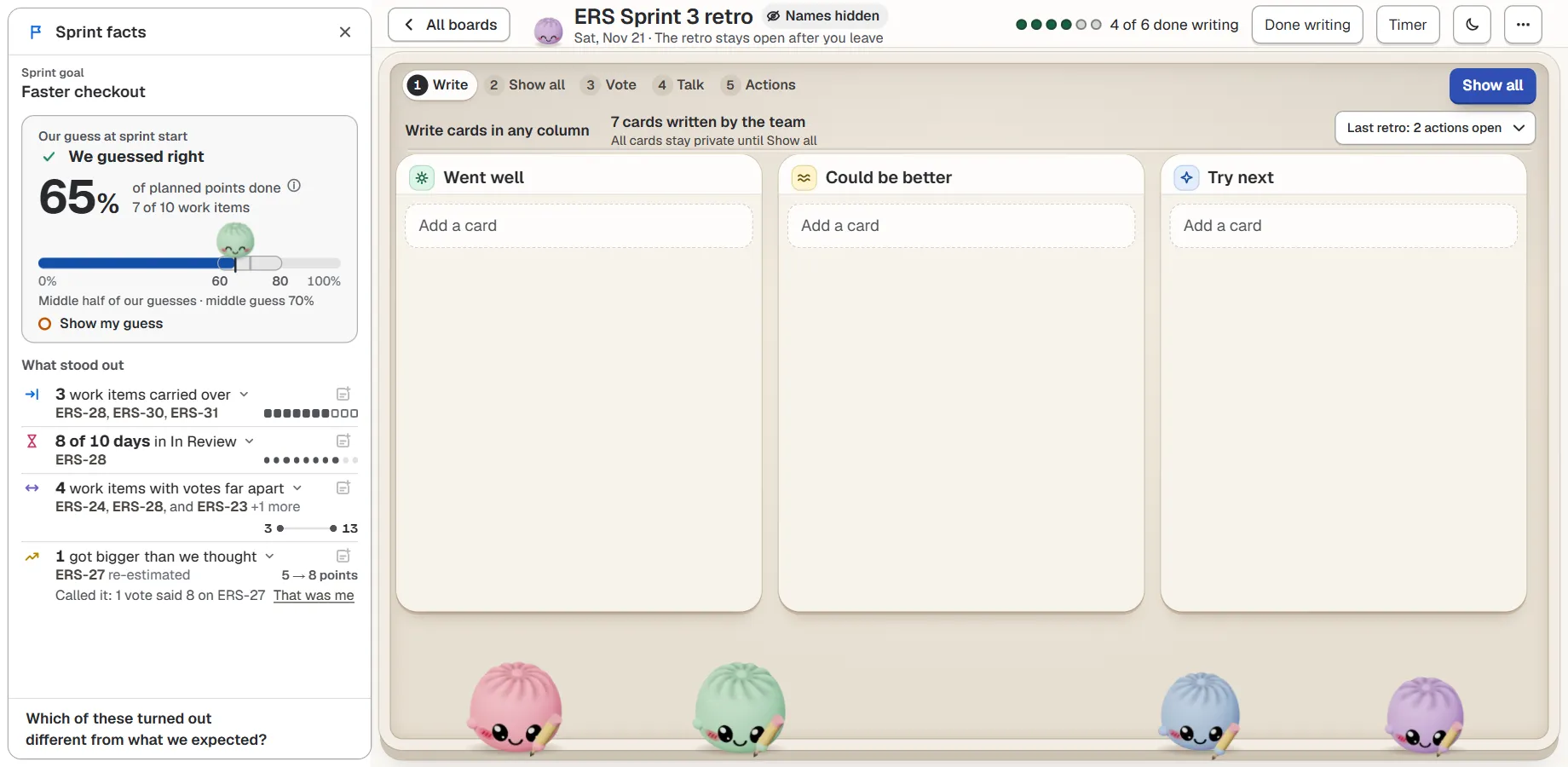 Retrospectiva de sprint no Jira: opções nativas e apps Como fazer retrospectiva de sprint no Jira: página e whiteboard do Confluence, um quadro de itens de trabalho e um app de retro dentro do Jira, lado a lado.
- Retrospectiva online e híbrida: cartões anônimos e respostas honestas Retrospectiva online ou híbrida com respostas honestas: escreva sozinho, cartões ocultos até todos estarem prontos, sem nomes e com a chamada falando primeiro.
-
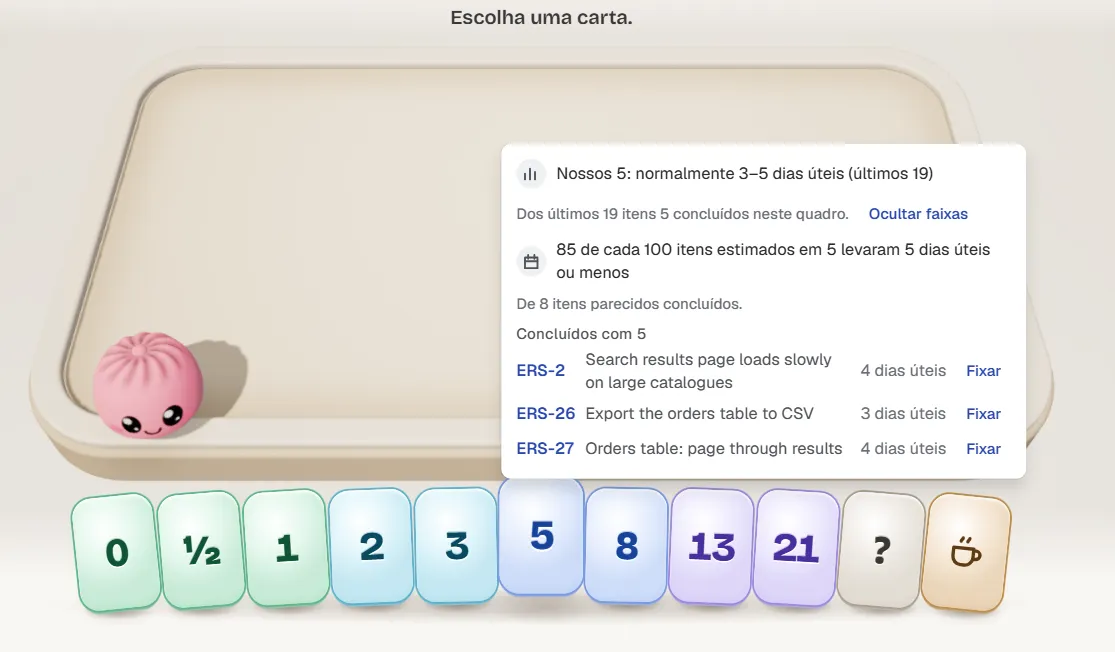 Story points explicados: Fibonacci, tamanhos de camiseta e o que um 5 significa O que os story points medem, quando usar Fibonacci ou tamanhos de camiseta e por que um 5 só significa algo quando você vê quanto tempo seus 5 levaram.
- Velocity ou throughput no planejamento da sprint do Jira Velocity soma estimativas por sprint, throughput conta itens de trabalho concluídos por semana. O que cada um mostra, quando usar e como ler os dois no Jira.
-
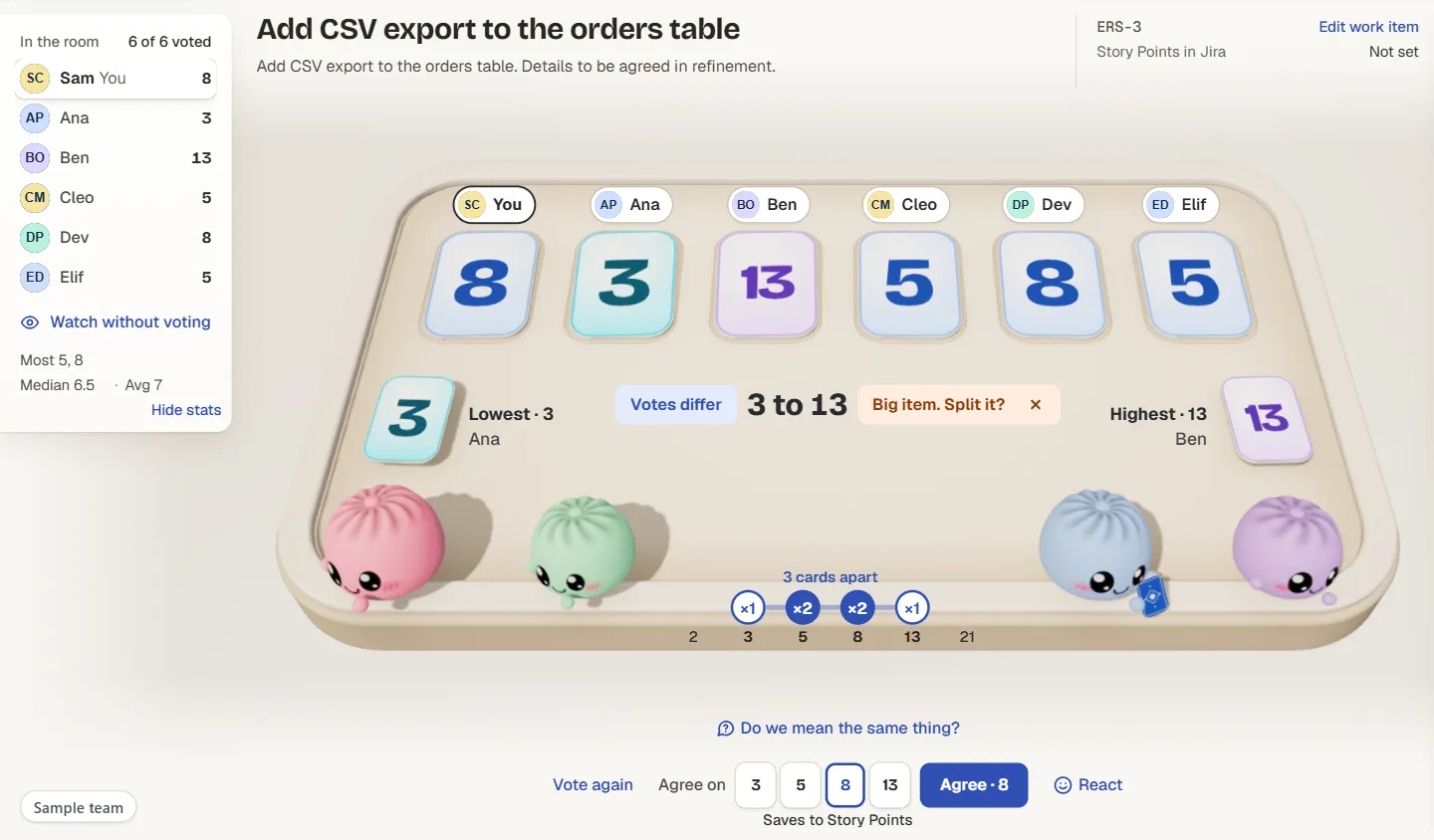 Votos 3 e 13: o que fazer quando as estimativas ficam distantes No planning poker, um diz 3 e outro 13. Converse antes de votar de novo, ouça os extremos primeiro e divida o item de trabalho se a distância continuar.
Outros artigos, em inglês
- Who is this Jira request waiting on? Another team's next stepWhen a Jira Service Management request is stuck on another team's task, here's how to find who has the next step, nudge them where they work, and follow up.
- Waiting time vs SLA time in Jira Service ManagementWhy a request can take 28 hours but show 4 hours on the SLA clock, and how to read waiting time and SLA time side by side without drawing the wrong conclusion.
- Customer follow-ups and auto-close in Jira Service ManagementSet up customer reminders in Jira Service Management that stop when the customer replies, plus a safe auto-close. Step by step with Automation, and an app option.
- Customer follow-up message templates for Jira Service ManagementEight copyable Jira Service Management messages: ask customers for missing details and files, follow up, give a last call, and brief colleagues internally.
- Monthly service review for Jira Service Management: agenda and templateRun a 30-minute monthly service review in Jira Service Management: which numbers to use, how to read them honestly, and how to leave with owners and dates.
- Being 85% sure: how confident forecasts work, in plain wordsWhat '8 in 10' or '85% sure' really means for a sprint or release date, how a forecast is built from your own history, and how to talk about it without a maths lecture.
- How to read the Jira velocity chart, and where it misleadsWhat the grey, green and black marks on Jira's velocity chart mean, how to read it as a range, and five places where it quietly gives the wrong impression.
- Story points, item counts or hours for forecasting in JiraWhich unit to forecast with in Jira: story points, a plain count of work items, or hours. What each is good at, how to test them side by side, and how to switch.
- The Jira sprint report explained: burndown, added work and what Done meansHow to read Jira's sprint report: the burndown lines, the asterisk on added work items, what counts as completed, and what the report cannot tell you.
- When will this epic or release be done? Forecasting dates in JiraWhat Jira's epic and release burndown show, a by-hand method that gives a range of dates, and how Bunlings Sprint Forecast puts a likely date on epics.
- Will we finish the sprint? Forecast it from your own history in JiraA simple way to answer 'will this sprint fit?' from your last ten sprints, by hand in Jira, and how Bunlings Sprint Forecast does the same replay for you.
- Work added and removed mid-sprint: what it does to your Jira numbersHow work that joins or leaves a sprint after it starts changes Jira's velocity chart, burndown and sprint report, and a simple way to keep your numbers honest.
- Are Jira guest users free? What counts and what doesn'tJira guests are free up to 5 per paid user on Standard, Premium and Enterprise. Who qualifies, what guests can do, why paid users can't be converted, and how to add one.
- Do service accounts and app users count as billable in Jira?Service accounts and the bot users apps create don't count toward your Jira user limit. An ordinary account you made for a script does. How to tell them apart.
- How to pause the SLA while waiting for the customer in Jira Service ManagementAdd a pause condition to a Jira Service Management SLA so the clock stops while you wait for the customer, and avoid the traps that keep it running or stuck.
- How to remind approvers in Jira Service Management when they don't respondRemind a Jira Service Management approver who has not decided: a scheduled Automation flow that tags them, the traps to avoid, and what to do when they are away.
- How to see who gave someone Jira access, and whenJira doesn't keep one 'given by' name. Find the group behind a person's access, then use the Jira and organization audit logs to see when, and where they fall short.
- How to track a Jira Service Management request that is waiting on a vendorA request is stuck at a supplier or other third party. Track the wait in Jira Service Management with a status, a promised date and a reminder, and see where it stops.
- Waiting for customer in Jira Service Management: what the status does and how to find stuck requestsWhat the Waiting for customer status does in Jira Service Management, what it leaves to you, and a saved search that finds requests stuck in it for days.
- Why your Jira Service Management agent count is higher than your agentsYour Jira Service Management license count is higher than the people who work on requests? Find every group that gives agent access, including admin groups, and fix it.
- Removed Jira users but the bill didn't go down? Here's whyWhy removing Jira users doesn't lower this month's bill: how maximum quantity billing and annual user tiers work, when the saving shows up, and what to check.
- How to change the owner of a filter or dashboard in Jira CloudChange a Jira filter or dashboard owner as an admin, find everything one person owns, and hand a leaver's filters over before the account is deleted.
- Atlassian's October 2026 price rise: what it means for your renewalOld and new Jira Cloud prices from Atlassian's own tables, when the 13 October 2026 rise reaches your bill, and when removing users really lowers it.
- Jira Service Management evidence handoff templateA copyable evidence handoff template for Jira Service Management requests, with a filled offboarding example, clear words for gaps and a readback test.
- Jira Service Management offboarding checklist for IT and HRAn offboarding checklist for IT and HR in Jira Service Management: who owns each step, where the proof lives, and how to record what nobody could check.
- Atlassian unique billable users explainedOne person counts once for Atlassian Guard, collections and Enterprise plans, but once per app on Standard and Premium. A worked example reconciles the numbers.
- How to check which groups give Jira accessSee which groups give people access to Jira in Atlassian Administration, which of them one person is in, and why one removal may not end their access.
- Jira billable users explained: who counts and how to checkWhat makes one person billable for Jira Cloud, who doesn't count, and how to check their access, every group behind it, and when removing it changes the bill.
- Suspend vs remove user access in AtlassianWhen to suspend, remove, deactivate or delete a user in Atlassian Cloud, and what each does to access, billing, groups, data and the way back.
- Why removing a user from a group did not remove Jira accessTaking someone out of one group often leaves Jira access in place, or it comes back. Every reason it survives, how to check each one, and how to confirm.
- How to find where a Jira group is usedJira has no single view of where a group is used. Here is every place to check by hand, from permission schemes and space roles to filters and Automation flows.
O Seatwise está disponível em inglês, alemão e japonês. O RequestOps está em inglês. O Bunlings está disponível em dez idiomas, inclusive em português.