
 Bunlings : apps de sprint pour Jira





Articles
Des guides pratiques pour les équipes Jira : estimation en planning poker et rétrospectives de sprint (Bunlings). Les autres articles sont en anglais.
-
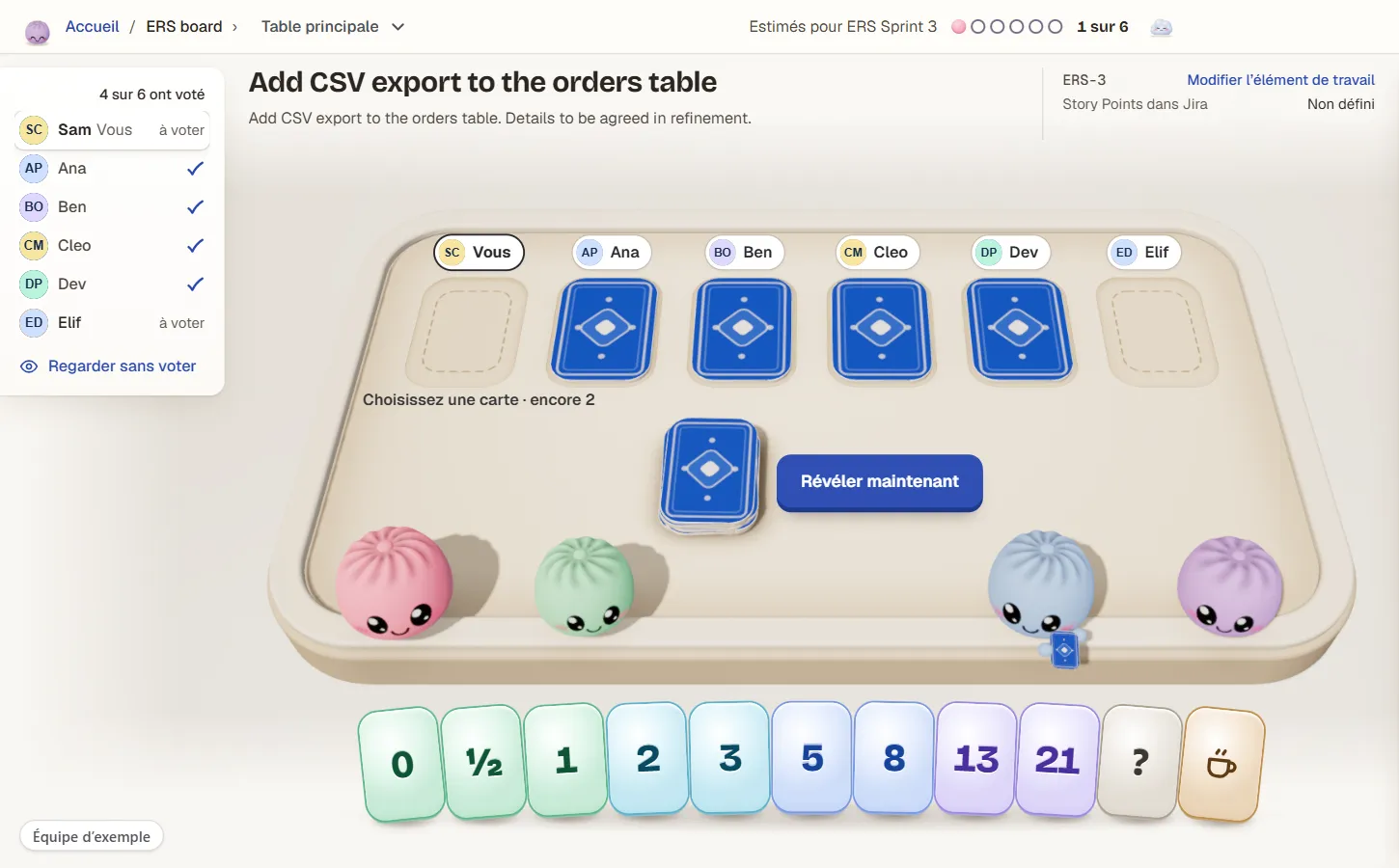 Planning poker (scrum poker) : comment ça marche, en 5 étapes pour votre premier tour Planning poker (scrum poker) : ce que signifient les cartes, les cinq étapes d’un tour, que faire quand les votes divergent et quand quelqu’un joue un 21.
-
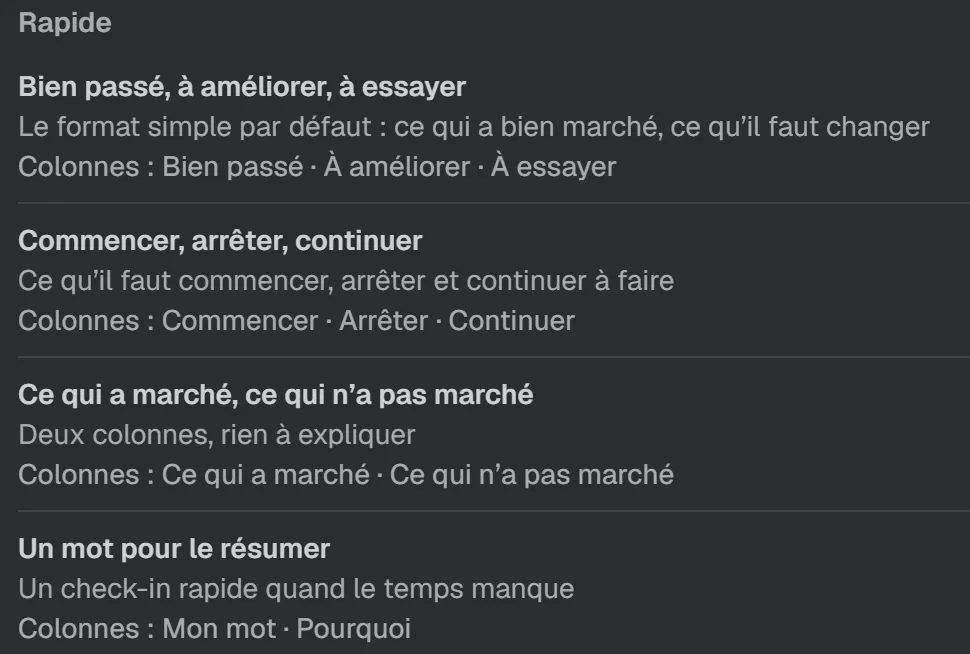 15 formats de rétrospective agile et quand utiliser chacun 15 formats de rétrospective agile classés par situation : rapide, ressenti, amélioration. Ce que chacun demande, et le sprint auquel il convient.
-
 30 brise-glace de rétrospective agile sans malaise 30 brise-glace pour rétrospective de sprint, classés par ambiance : comment en mener un en deux minutes et quand le sauter. Sans risque au travail.
-
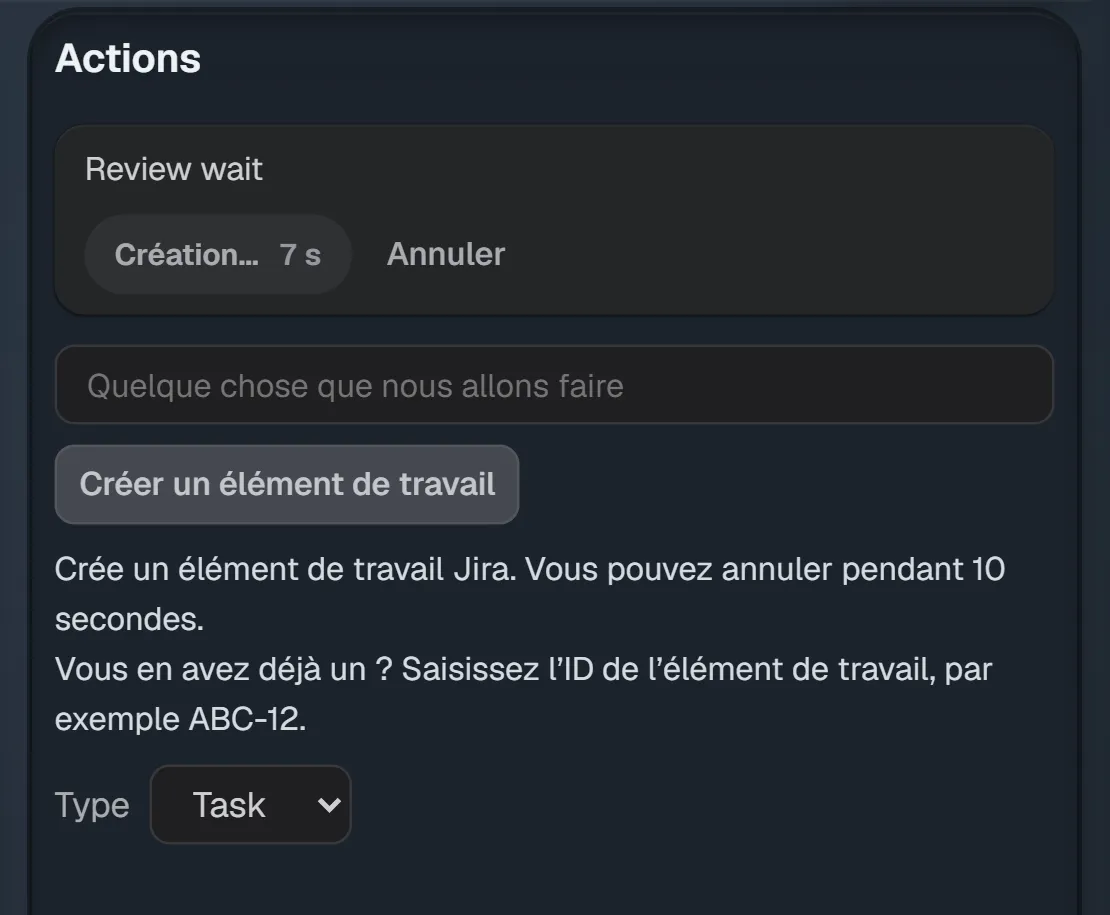 Actions de rétrospective agile : comment les mener vraiment à bien Pourquoi les actions de rétro s’enlisent et comment y remédier : un responsable, un élément de travail Jira, et un regard sur les actions ouvertes d’abord.
-
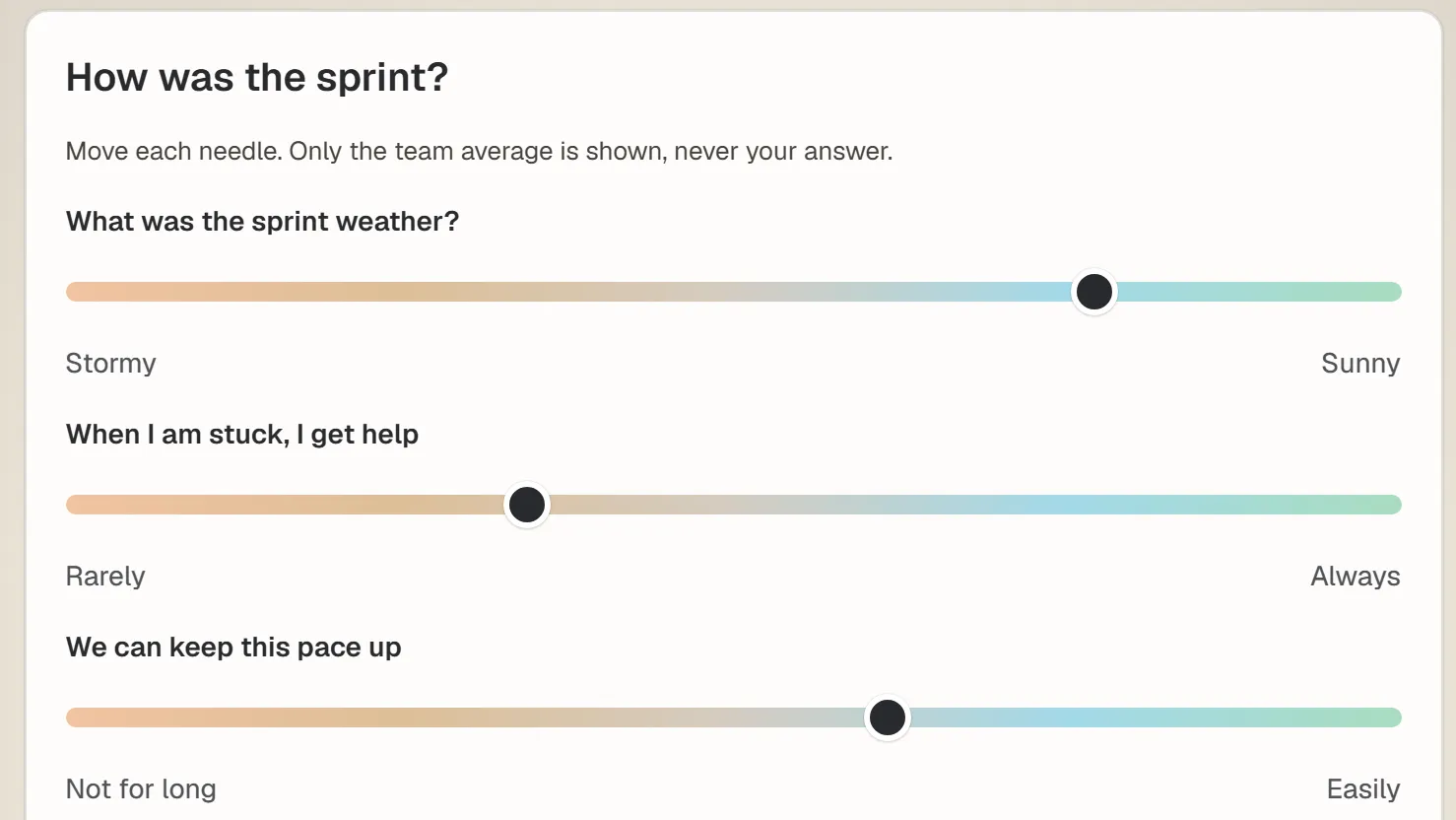 Bilan de santé d’équipe en rétrospective agile : six questions et quoi faire des réponses Comment faire un bilan de santé d’équipe en rétro de sprint : six affirmations simples, une échelle, la fréquence, et que faire quand les réponses sont basses.
-
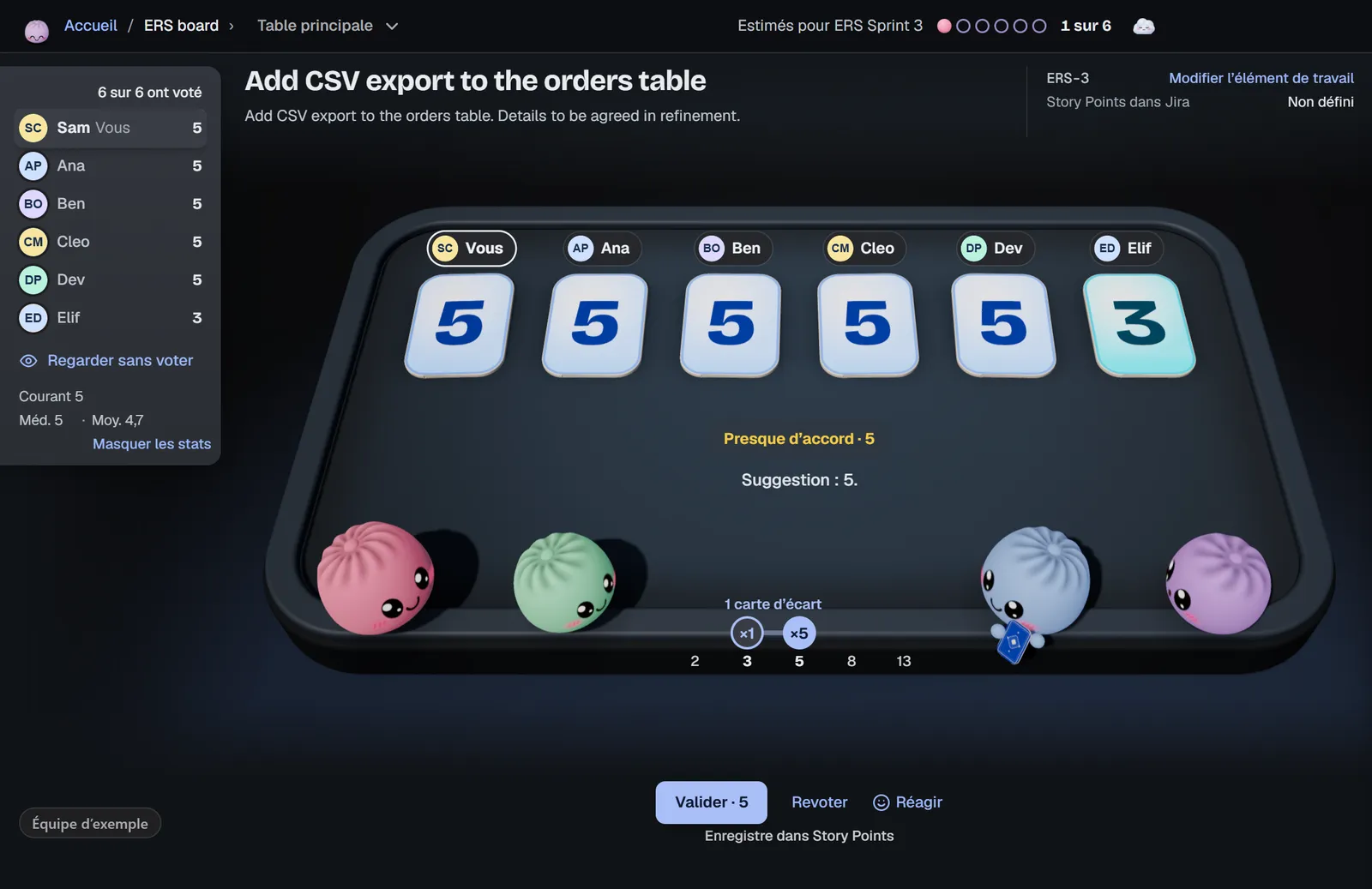 Champ Story Points absent dans Jira ? Trouvez le champ que votre tableau utilise vraiment Pourquoi le champ Story Points manque sur un élément de travail Jira, espaces gérés par l’équipe ou l’entreprise, et comment trouver le bon champ.
-
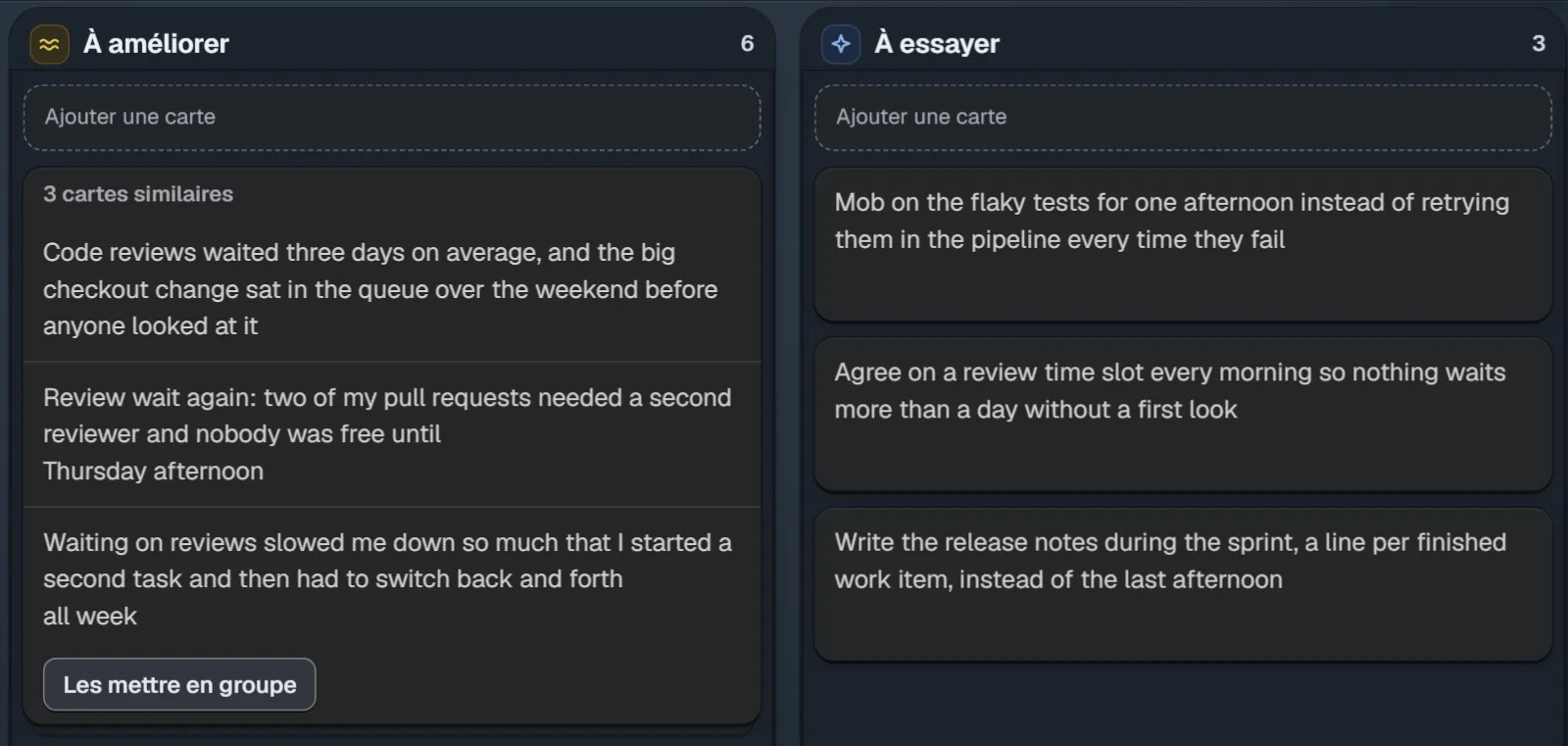 Comment animer une rétrospective de sprint en 45 minutes Un déroulé de rétrospective agile en 45 minutes : sept blocs, chacun avec une heure de début et une ligne d’arrivée, de l’ouverture à la clôture.
-
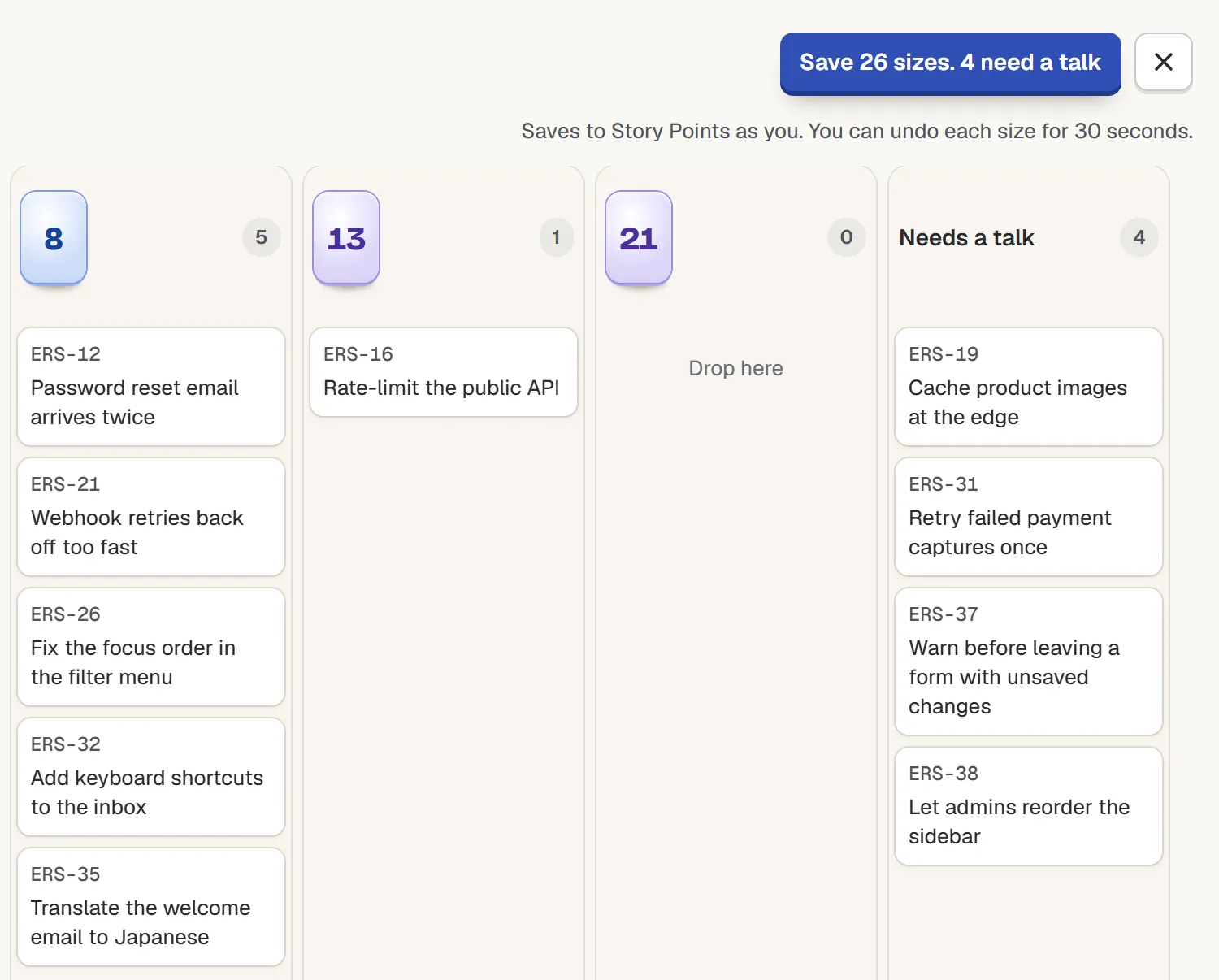 Comment estimer un gros backlog en 30 minutes Un plan de 30 minutes pour estimer un long backlog Jira : triez les éléments de travail par taille, discutez des désaccords, enregistrez le reste.
-
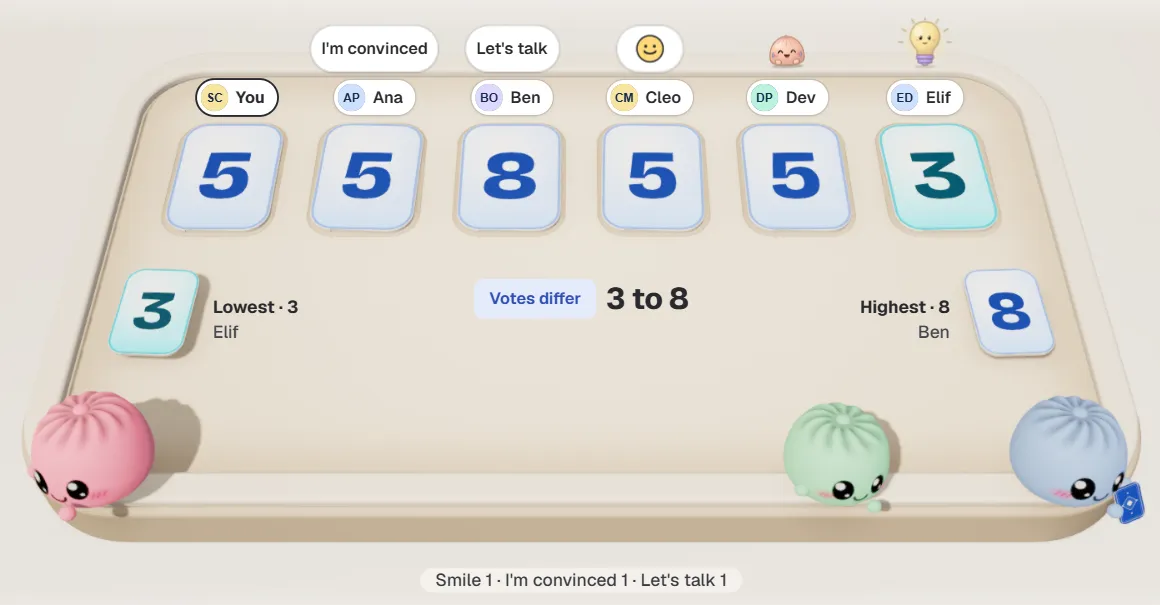 Comment rendre vos réunions agiles amusantes sans être puéril Des réunions agiles amusantes gardent l’humour dans la situation, jamais sur une personne, et tout se coupe. Ce qui aide, ce qui agace, et les interrupteurs.
-
 Effet d’ancrage en estimation : le premier nombre gagne, et comment l’éviter Quelqu’un dit 8 et tout le monde pense 8. Les pièges de l’estimation agile derrière l’ancrage, comment les repérer et comment le vote masqué règle le pire.
- Estimer des story points dans Jira Cloud : ce que Jira fait, et ce qu’il vous laisse Jira Cloud stocke une estimation par élément de travail mais n’a pas de vote. Activer l’estimation, saisir les story points, et ce qu’ajoute un planning poker.
-
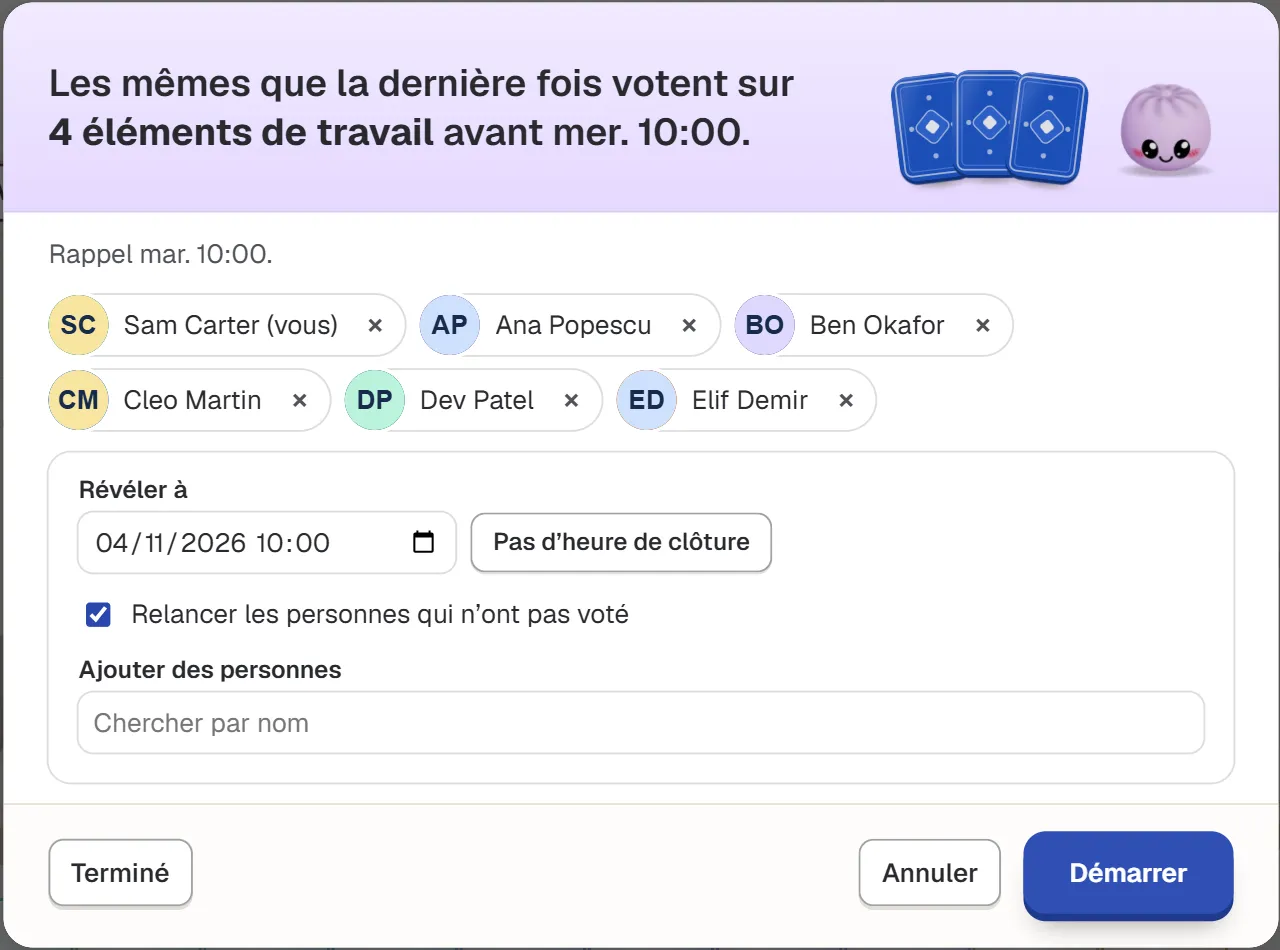 Estimer sans réunion : comment garder des votes honnêtes Estimation agile asynchrone dans Jira, sur plusieurs fuseaux : qui vote, une heure de révélation, des votes masqués. Avec Jira seul ou avec l’appli.
-
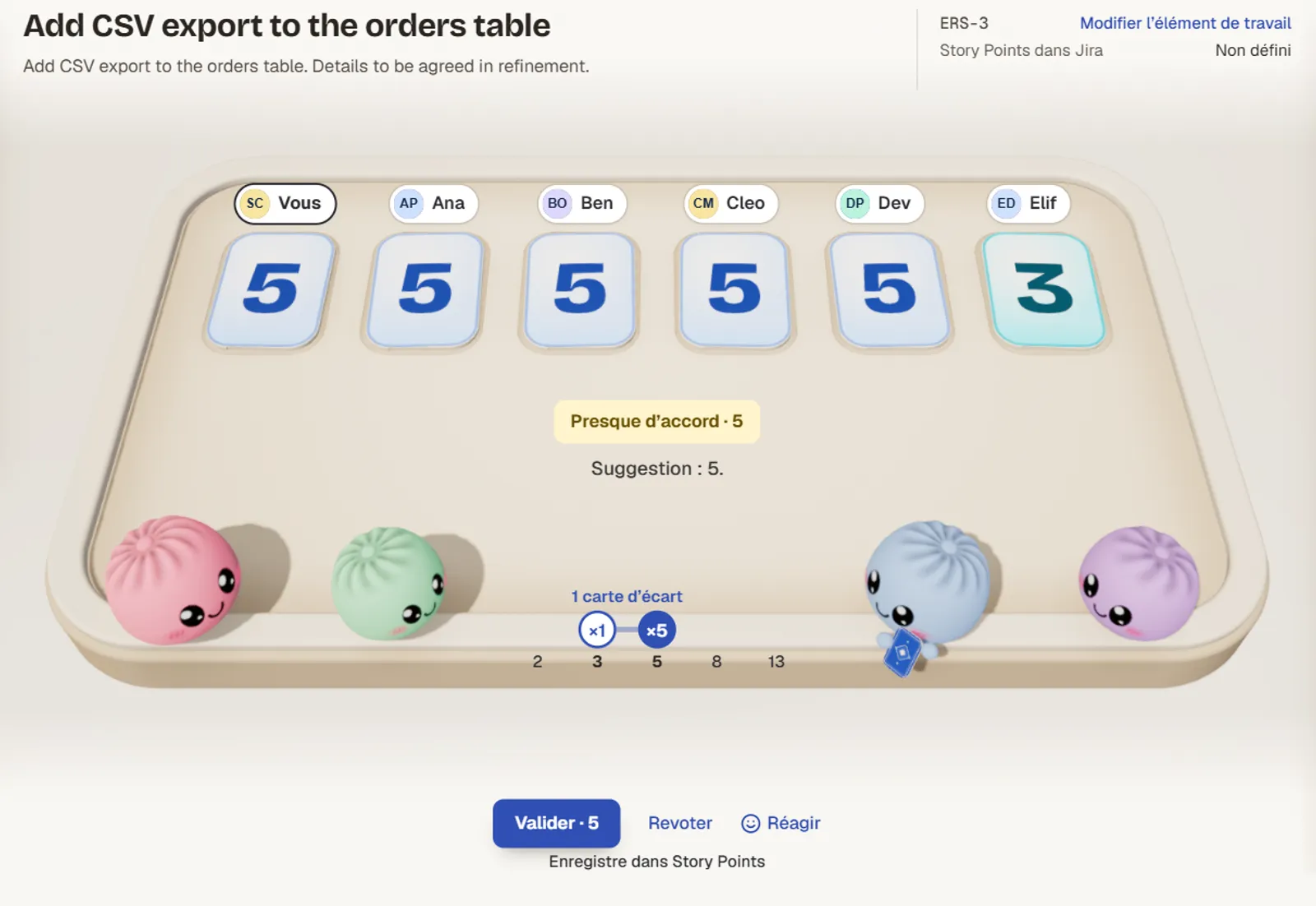 Jira seul ou Bunlings : planning poker et rétrospectives comparés Planning poker et rétrospective de sprint : ce que Jira Cloud fait seul, ce que Bunlings ajoute dans Jira, et quand Jira seul est le meilleur choix.
- Planning poker dans Jira : comment mener un tour sans quitter Jira Planning poker (scrum poker) dans Jira : ouvrez la salle depuis le sprint, votez en secret, retournez les cartes, puis enregistrez le nombre dans Jira.
-
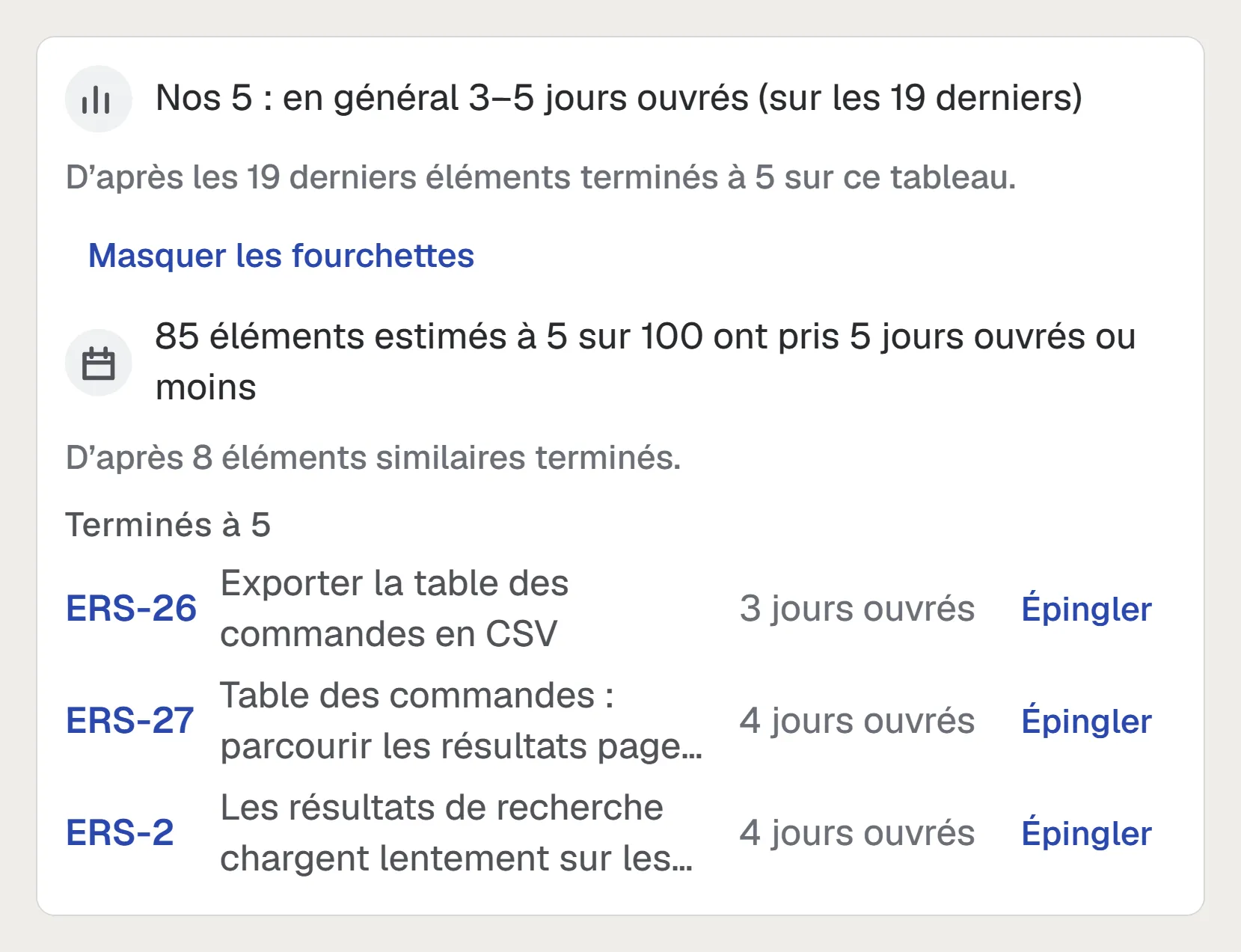 Pourquoi nos estimations sont-elles toujours fausses ? Ce que votre historique peut vous dire Les estimations dérivent quand personne ne vérifie ce qu’un 5 a pris. Pourquoi, un contrôle de dix minutes par sprint, et comment voir ce que prennent vos 5.
-
 Prévision Kanban dans Jira : des dates de fin sans story points Comptez les éléments terminés par semaine, rejouez ces semaines et répondez par une fourchette, pas une date. Sans story points, sur tout tableau Kanban.
- Rétrospective à distance et hybride : cartes anonymes et réponses honnêtes Une rétrospective agile à distance ou hybride qui obtient des réponses franches : écrire seul, cartes masquées, sans noms, les gens en visio parlent d’abord.
-
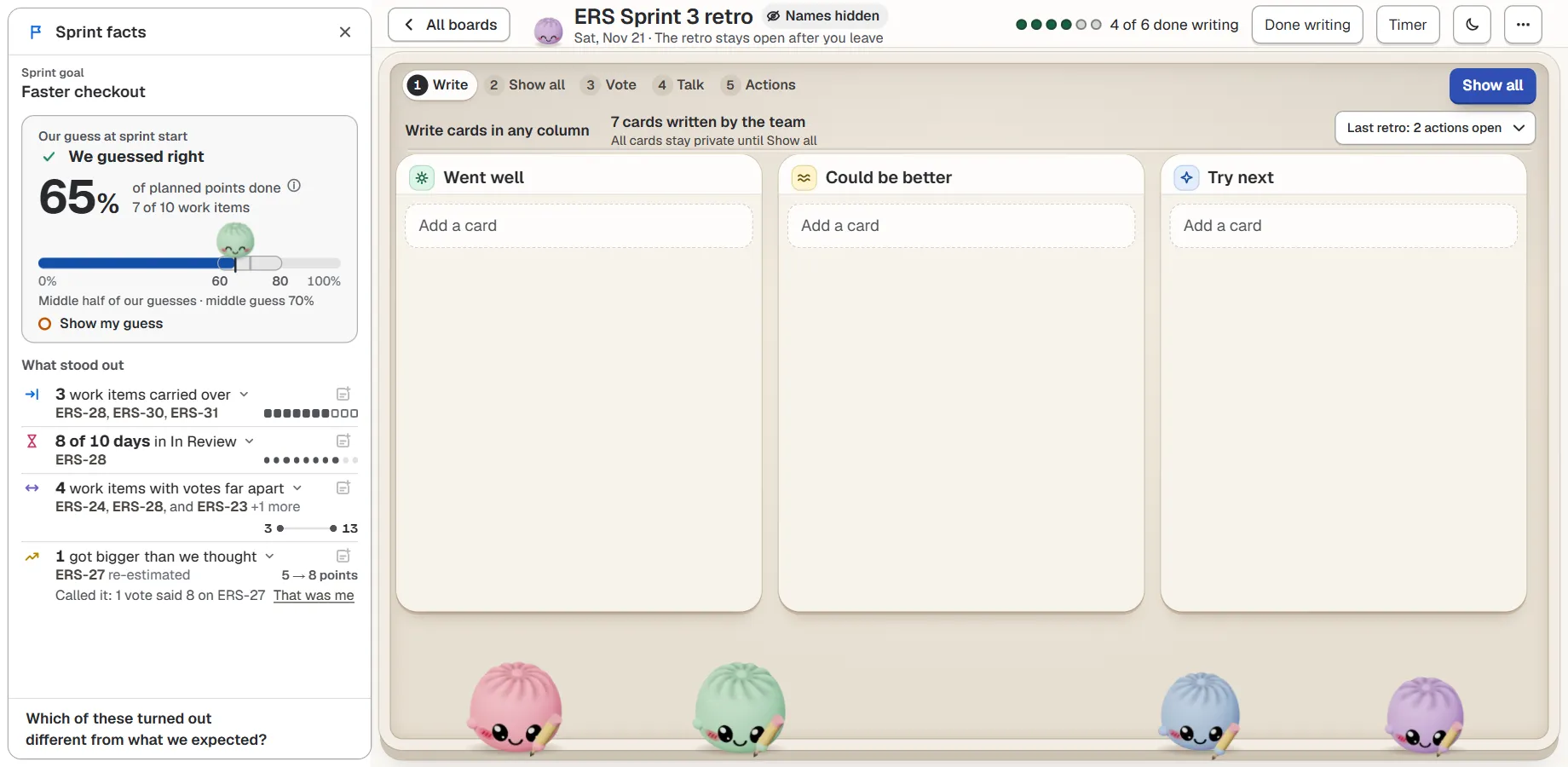 Rétrospective de sprint dans Jira : options natives et applications Comment mener une rétrospective de sprint dans Jira : page et tableau blanc Confluence, tableau d’éléments de travail ou application de rétro, côte à côte.
-
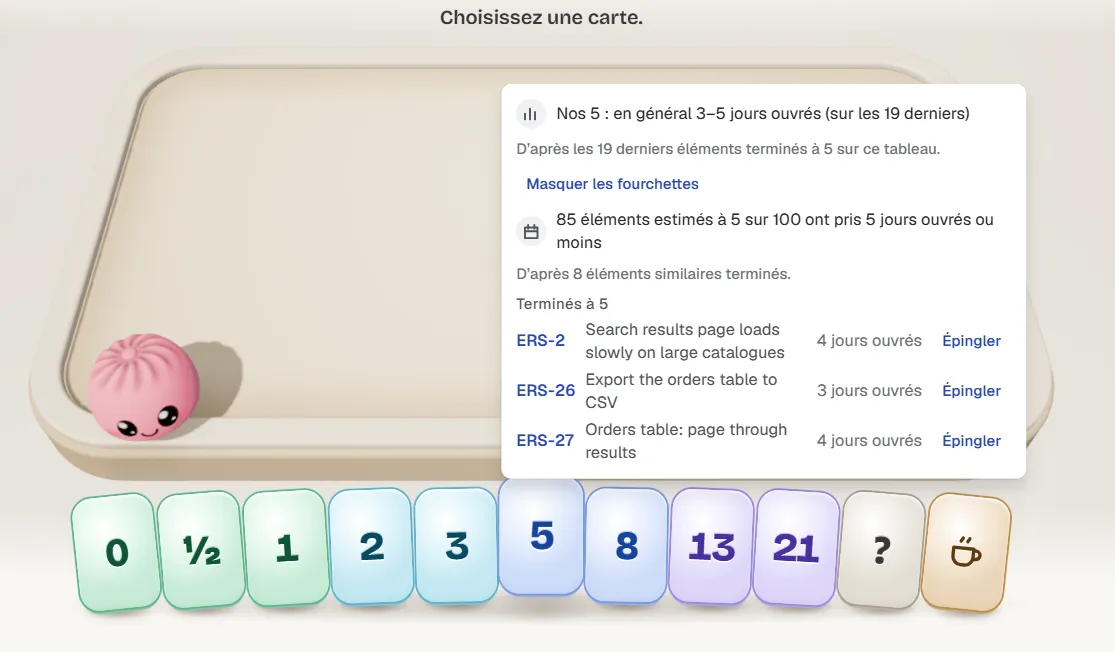 Story points expliqués : Fibonacci, tailles de t-shirt et ce que veut dire un 5 Ce que mesurent les story points en estimation agile, Fibonacci ou tailles de t-shirt, et pourquoi un 5 ne dit rien avant de vérifier la durée de vos 5.
- Vélocité ou débit pour planifier un sprint dans Jira La vélocité additionne les estimations par sprint, le débit compte les éléments terminés. Ce que chacun dit, quand l’utiliser et comment les lire dans Jira.
-
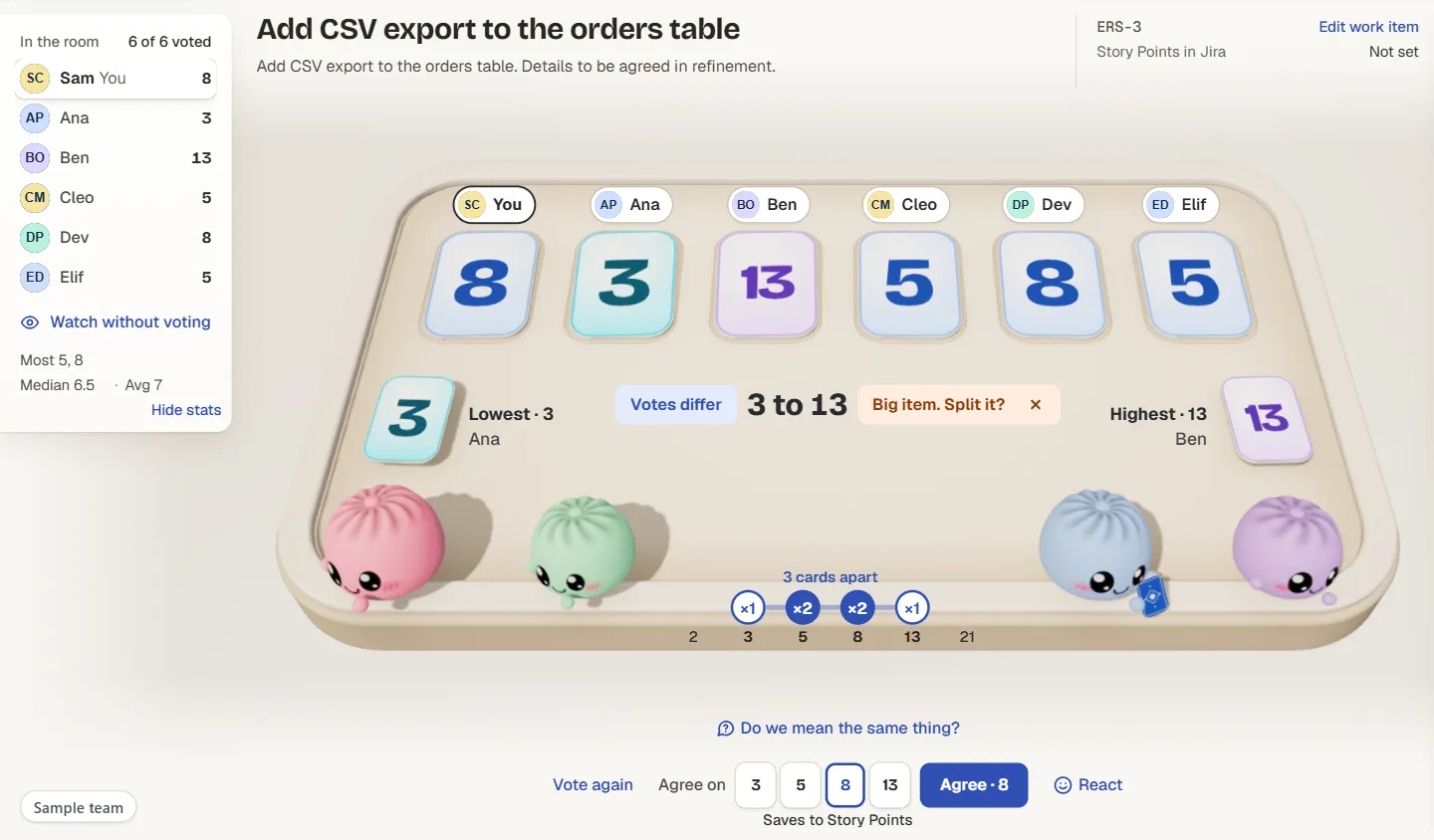 Votes 3 et 13 : que faire quand les estimations sont très éloignées ? Les cartes se retournent : l’un dit 3, l’autre 13. Parlez avant de revoter, interrogez d’abord les extrêmes, et découpez l’élément de travail si l’écart reste.
Autres articles, en anglais
- Who is this Jira request waiting on? Another team's next stepWhen a Jira Service Management request is stuck on another team's task, here's how to find who has the next step, nudge them where they work, and follow up.
- Waiting time vs SLA time in Jira Service ManagementWhy a request can take 28 hours but show 4 hours on the SLA clock, and how to read waiting time and SLA time side by side without drawing the wrong conclusion.
- Customer follow-ups and auto-close in Jira Service ManagementSet up customer reminders in Jira Service Management that stop when the customer replies, plus a safe auto-close. Step by step with Automation, and an app option.
- Customer follow-up message templates for Jira Service ManagementEight copyable Jira Service Management messages: ask customers for missing details and files, follow up, give a last call, and brief colleagues internally.
- Monthly service review for Jira Service Management: agenda and templateRun a 30-minute monthly service review in Jira Service Management: which numbers to use, how to read them honestly, and how to leave with owners and dates.
- Being 85% sure: how confident forecasts work, in plain wordsWhat '8 in 10' or '85% sure' really means for a sprint or release date, how a forecast is built from your own history, and how to talk about it without a maths lecture.
- How to read the Jira velocity chart, and where it misleadsWhat the grey, green and black marks on Jira's velocity chart mean, how to read it as a range, and five places where it quietly gives the wrong impression.
- Story points, item counts or hours for forecasting in JiraWhich unit to forecast with in Jira: story points, a plain count of work items, or hours. What each is good at, how to test them side by side, and how to switch.
- The Jira sprint report explained: burndown, added work and what Done meansHow to read Jira's sprint report: the burndown lines, the asterisk on added work items, what counts as completed, and what the report cannot tell you.
- When will this epic or release be done? Forecasting dates in JiraWhat Jira's epic and release burndown show, a by-hand method that gives a range of dates, and how Bunlings Sprint Forecast puts a likely date on epics.
- Will we finish the sprint? Forecast it from your own history in JiraA simple way to answer 'will this sprint fit?' from your last ten sprints, by hand in Jira, and how Bunlings Sprint Forecast does the same replay for you.
- Work added and removed mid-sprint: what it does to your Jira numbersHow work that joins or leaves a sprint after it starts changes Jira's velocity chart, burndown and sprint report, and a simple way to keep your numbers honest.
- Are Jira guest users free? What counts and what doesn'tJira guests are free up to 5 per paid user on Standard, Premium and Enterprise. Who qualifies, what guests can do, why paid users can't be converted, and how to add one.
- Do service accounts and app users count as billable in Jira?Service accounts and the bot users apps create don't count toward your Jira user limit. An ordinary account you made for a script does. How to tell them apart.
- How to pause the SLA while waiting for the customer in Jira Service ManagementAdd a pause condition to a Jira Service Management SLA so the clock stops while you wait for the customer, and avoid the traps that keep it running or stuck.
- How to remind approvers in Jira Service Management when they don't respondRemind a Jira Service Management approver who has not decided: a scheduled Automation flow that tags them, the traps to avoid, and what to do when they are away.
- How to see who gave someone Jira access, and whenJira doesn't keep one 'given by' name. Find the group behind a person's access, then use the Jira and organization audit logs to see when, and where they fall short.
- How to track a Jira Service Management request that is waiting on a vendorA request is stuck at a supplier or other third party. Track the wait in Jira Service Management with a status, a promised date and a reminder, and see where it stops.
- Waiting for customer in Jira Service Management: what the status does and how to find stuck requestsWhat the Waiting for customer status does in Jira Service Management, what it leaves to you, and a saved search that finds requests stuck in it for days.
- Why your Jira Service Management agent count is higher than your agentsYour Jira Service Management license count is higher than the people who work on requests? Find every group that gives agent access, including admin groups, and fix it.
- Removed Jira users but the bill didn't go down? Here's whyWhy removing Jira users doesn't lower this month's bill: how maximum quantity billing and annual user tiers work, when the saving shows up, and what to check.
- How to change the owner of a filter or dashboard in Jira CloudChange a Jira filter or dashboard owner as an admin, find everything one person owns, and hand a leaver's filters over before the account is deleted.
- Atlassian's October 2026 price rise: what it means for your renewalOld and new Jira Cloud prices from Atlassian's own tables, when the 13 October 2026 rise reaches your bill, and when removing users really lowers it.
- Jira Service Management evidence handoff templateA copyable evidence handoff template for Jira Service Management requests, with a filled offboarding example, clear words for gaps and a readback test.
- Jira Service Management offboarding checklist for IT and HRAn offboarding checklist for IT and HR in Jira Service Management: who owns each step, where the proof lives, and how to record what nobody could check.
- Atlassian unique billable users explainedOne person counts once for Atlassian Guard, collections and Enterprise plans, but once per app on Standard and Premium. A worked example reconciles the numbers.
- How to check which groups give Jira accessSee which groups give people access to Jira in Atlassian Administration, which of them one person is in, and why one removal may not end their access.
- Jira billable users explained: who counts and how to checkWhat makes one person billable for Jira Cloud, who doesn't count, and how to check their access, every group behind it, and when removing it changes the bill.
- Suspend vs remove user access in AtlassianWhen to suspend, remove, deactivate or delete a user in Atlassian Cloud, and what each does to access, billing, groups, data and the way back.
- Why removing a user from a group did not remove Jira accessTaking someone out of one group often leaves Jira access in place, or it comes back. Every reason it survives, how to check each one, and how to confirm.
- How to find where a Jira group is usedJira has no single view of where a group is used. Here is every place to check by hand, from permission schemes and space roles to filters and Automation flows.
Seatwise est disponible en anglais, en allemand et en japonais. RequestOps est en anglais. Bunlings est disponible en dix langues, dont le français.