
 Bunlings: apps de sprint para Jira





Artículos
Guías prácticas para equipos de Jira: estimación con planning poker y retrospectivas de sprint (Bunlings). El resto de artículos está en inglés.
-
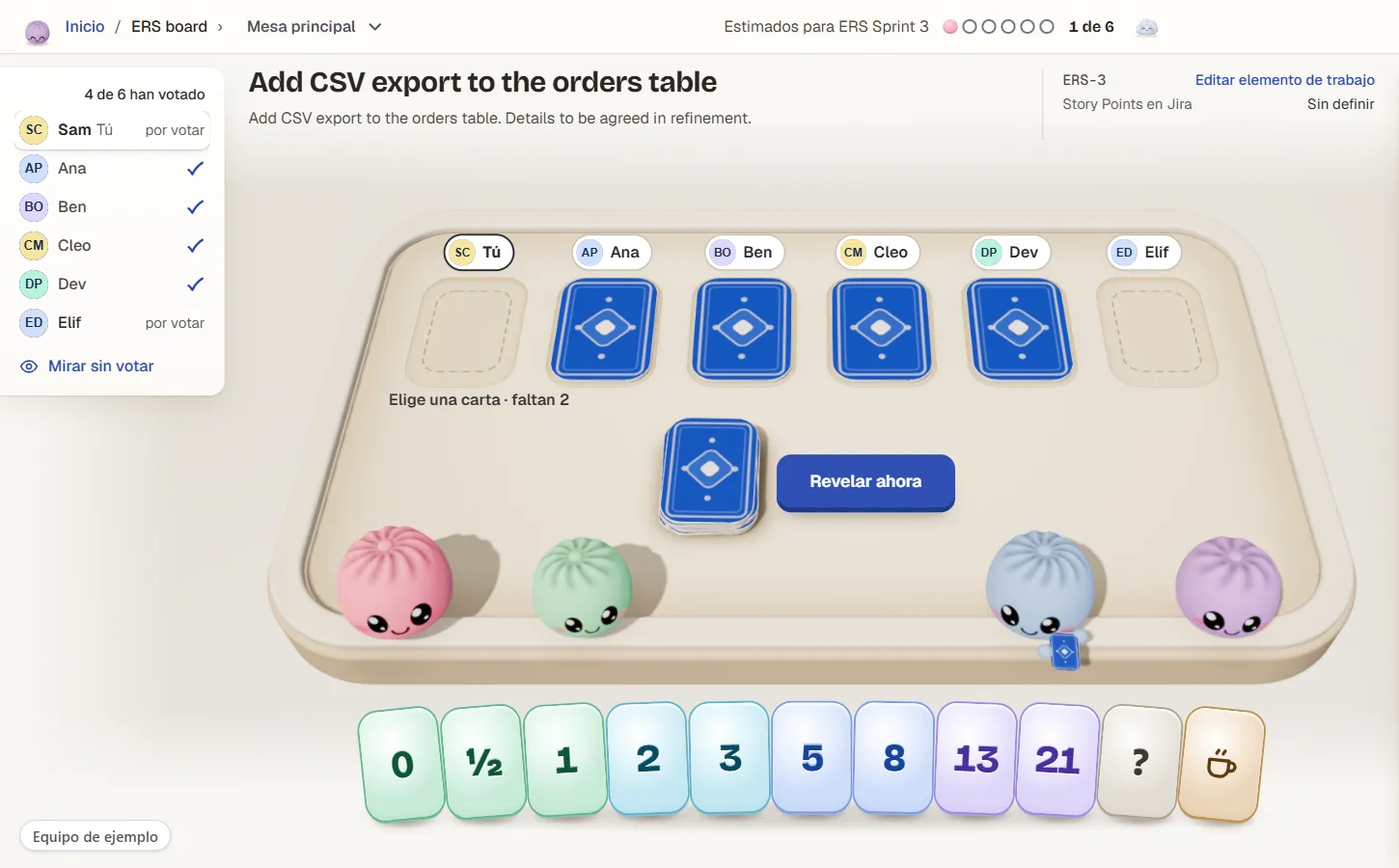 Planning poker: cómo funciona en 5 pasos para tu primera ronda Planning poker (scrum poker) explicado: qué significan las cartas, los cinco pasos de una ronda, qué hacer si los votos se separan y con un 21.
-
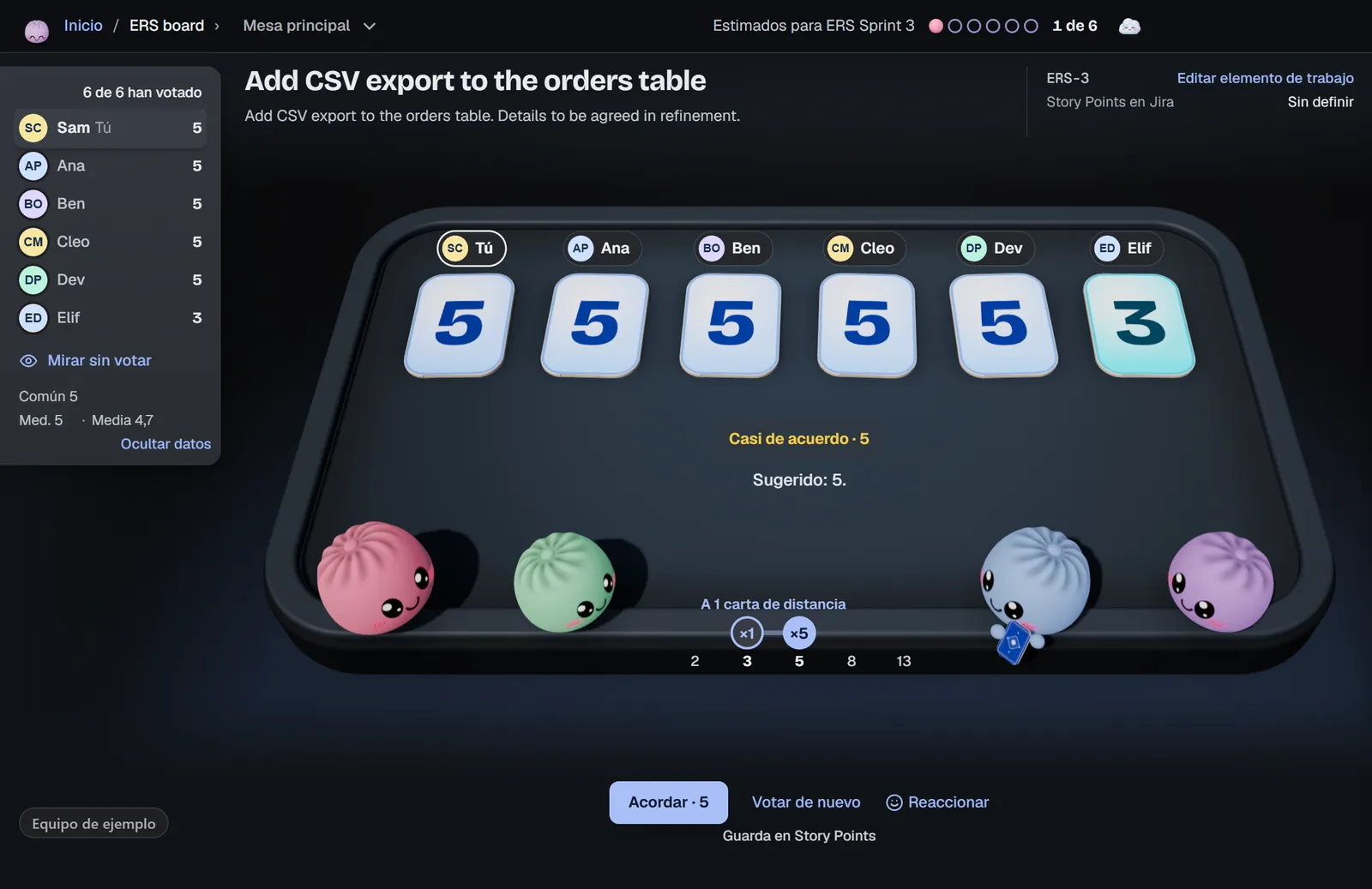 ¿Falta el campo Story Points en Jira? Encuentra el campo que de verdad usa tu tablero Por qué falta el campo Story Points (puntos de historia) en un elemento de trabajo de Jira, qué separa los espacios y cómo hallar el campo que usa tu tablero.
-
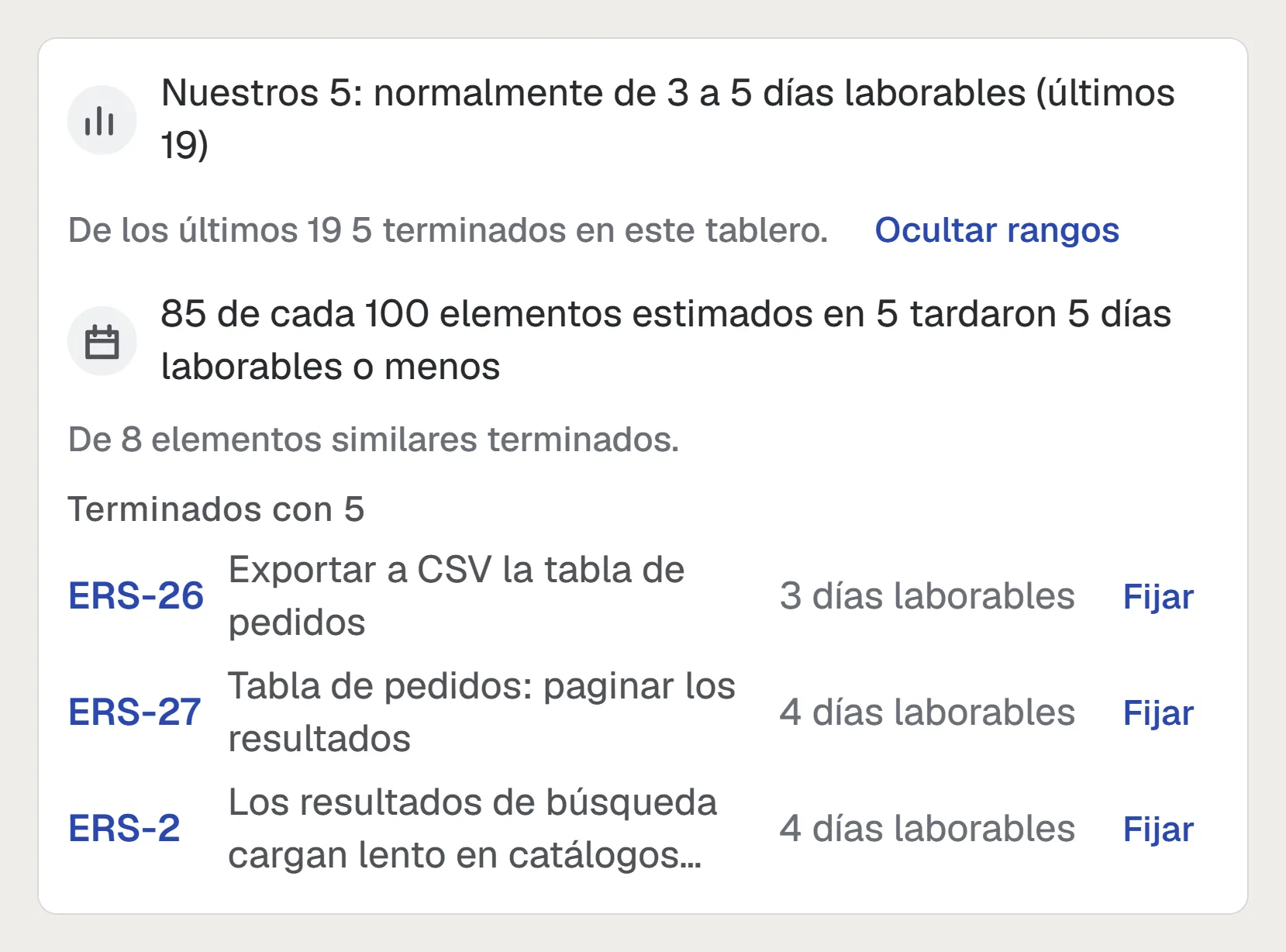 ¿Por qué nuestras estimaciones siempre fallan? Lo que te puede decir tu propio historial Las estimaciones se desvían cuando nadie comprueba cuánto tardó de verdad un 5. Por qué pasa en Jira y una revisión de diez minutos por sprint para verlo.
-
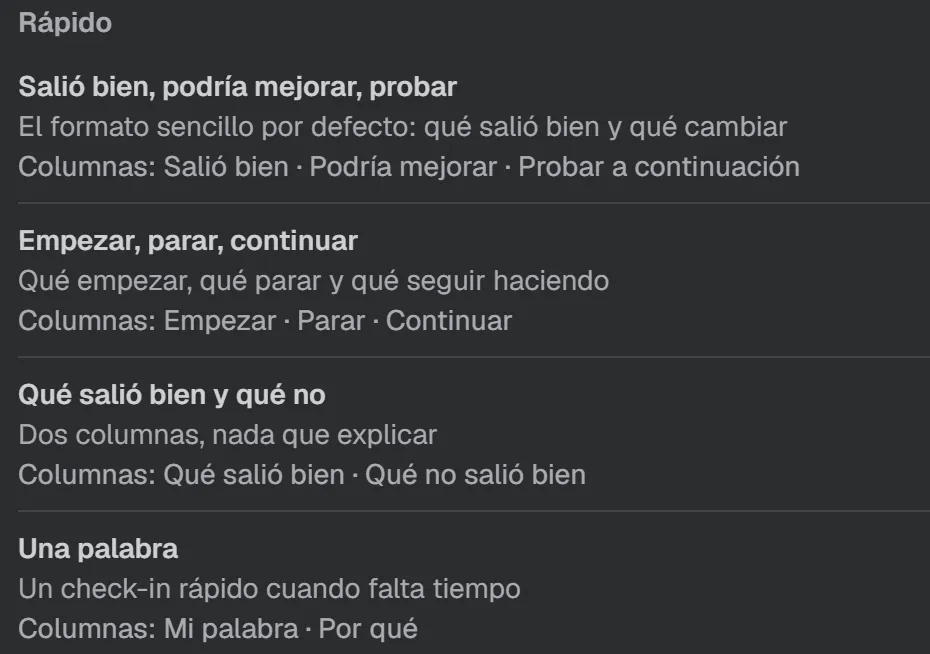 15 formatos de retrospectiva ágil y cuándo usar cada uno 15 formatos de retrospectiva ordenados por situación: rápido, sentimientos y mejorar. Qué pregunta cada uno y a qué tipo de sprint le va bien.
-
 30 dinámicas rompehielos para retrospectivas sin vergüenza ajena 30 rompehielos para la retrospectiva de sprint según el ánimo, cómo hacer uno en dos minutos y cuándo saltarlo. Aptos para el trabajo, de respuesta corta.
-
 Acciones de retro que de verdad se hacen Por qué se atascan las acciones de la retrospectiva ágil y cómo arreglarlo: una persona responsable, un elemento de trabajo de Jira y mirar antes las abiertas.
-
 Check-in de salud del equipo en retros: seis preguntas y qué hacer con las respuestas Cómo hacer un chequeo de salud del equipo en la retrospectiva del sprint: seis frases, una escala, cada cuánto preguntar y qué hacer si salen bajas.
-
 Cómo dirigir una retrospectiva de sprint en 45 minutos Agenda para una retrospectiva de sprint de 45 minutos: siete bloques con hora de inicio y meta, del inicio y escribir a votar, acciones y cierre.
-
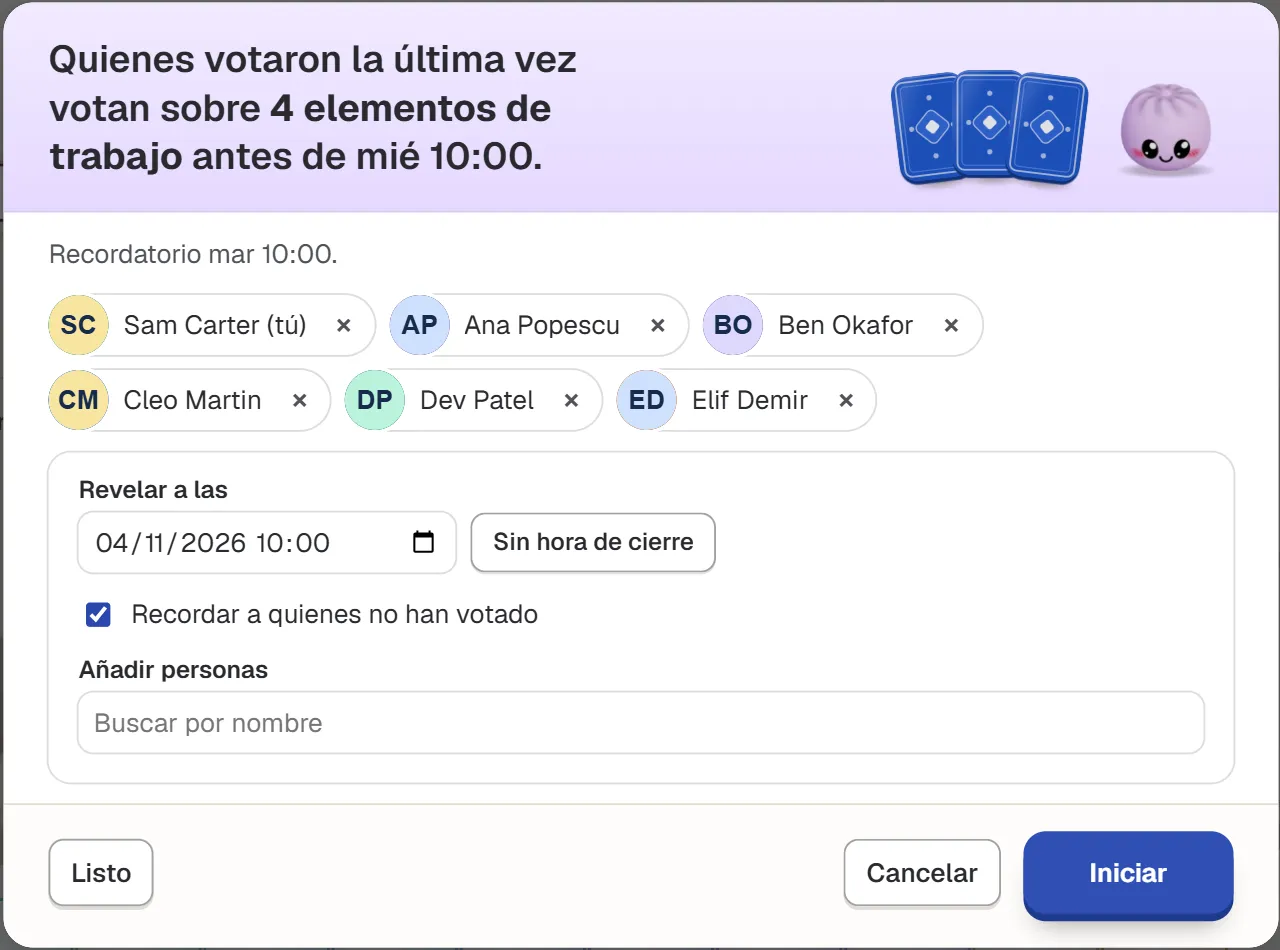 Cómo estimar sin una reunión (y mantener los votos honestos) Estimación ágil asíncrona en Jira entre zonas horarias: quién vota, una hora de revelación y votos ocultos hasta entonces. Con Jira solo y con una app.
-
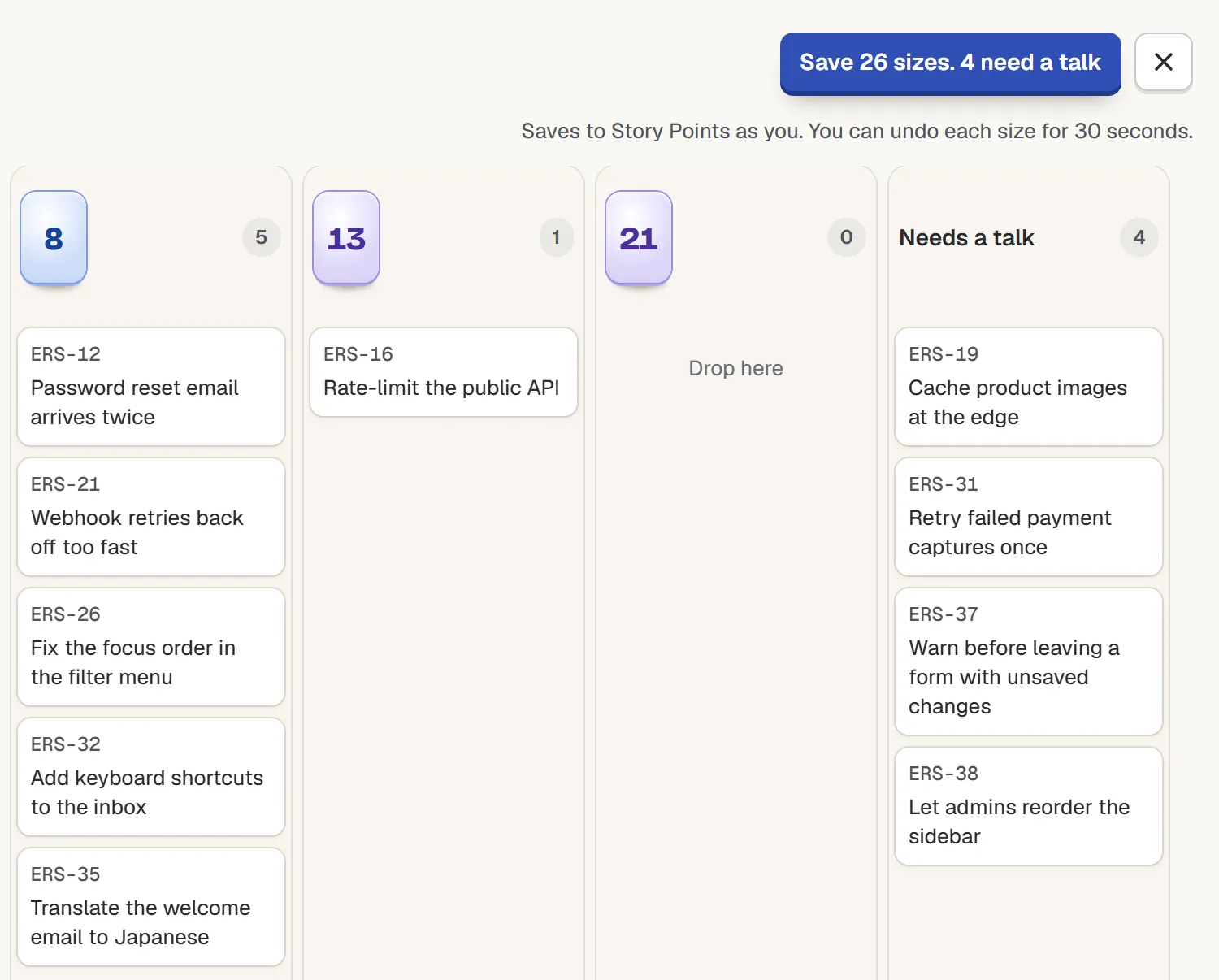 Cómo estimar un backlog grande en 30 minutos Plan de 30 minutos para estimar un backlog de Jira: ordena los elementos por tamaños en equipo, habla solo de los dudosos y guarda el resto en Jira.
-
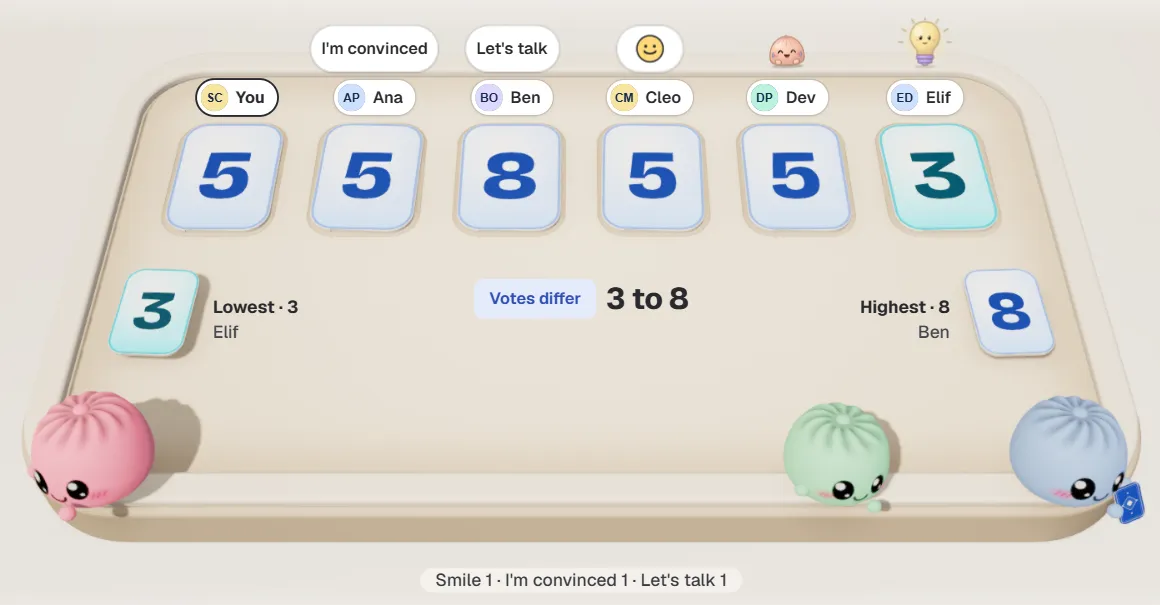 Cómo hacer divertidas las reuniones ágiles sin caer en lo infantil Reuniones ágiles divertidas: el humor va en la situación, nunca en una persona, y todo se puede bajar. Qué ayuda, qué molesta y dónde están los interruptores.
- Estimar story points en Jira Cloud: lo que hace Jira y lo que te deja a ti Jira Cloud guarda una estimación por elemento de trabajo, pero no tiene votación. Cómo activarla, formas nativas de poner story points y qué añade una app.
-
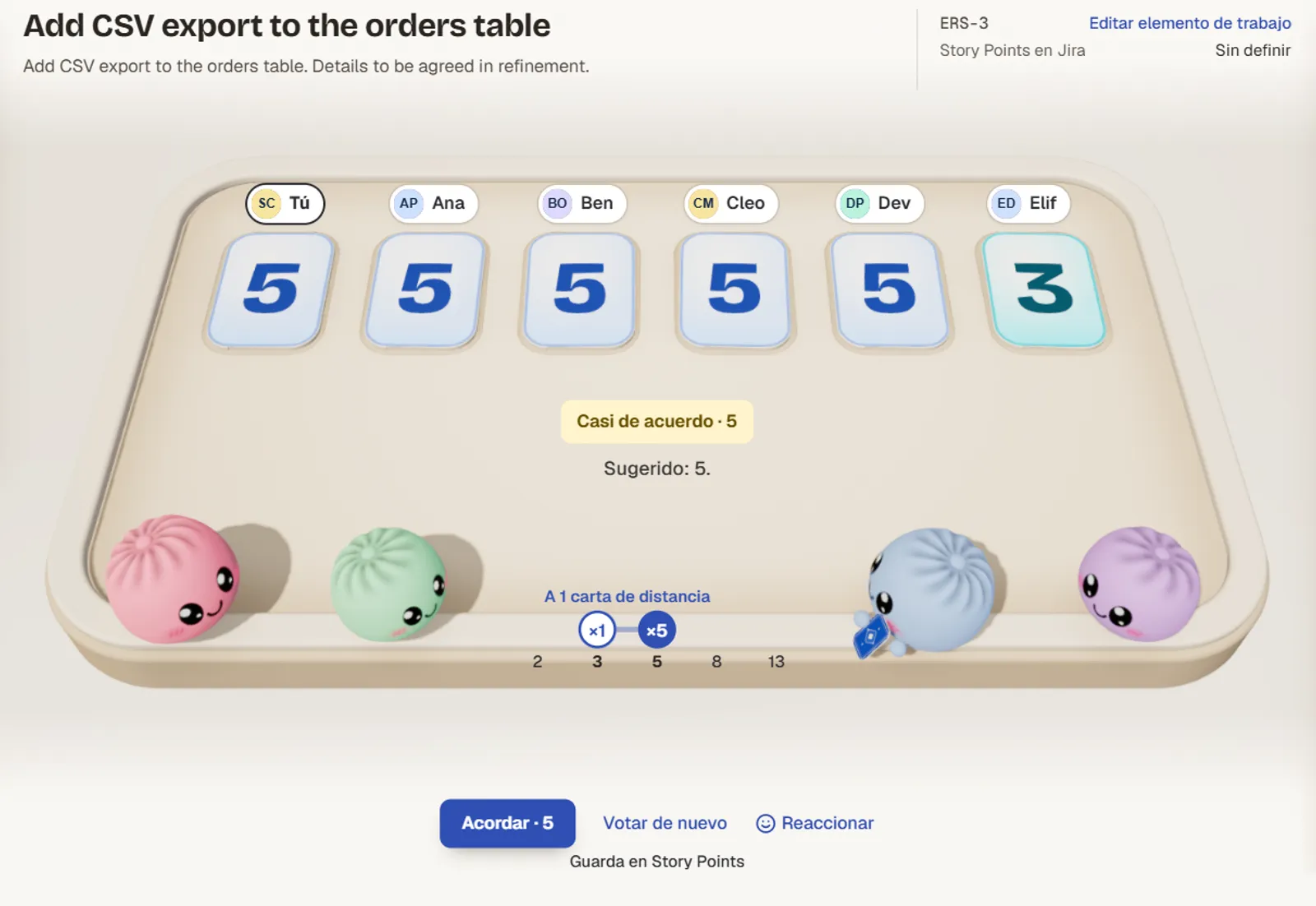 Jira sin app o Bunlings: planning poker y retros, comparados Qué hace Jira Cloud por sí solo en estimación y retros de sprint, qué añade Bunlings dentro de Jira y cuándo conviene más usar Jira sin app.
- Planning poker en Jira: cómo hacer una ronda sin salir de Jira Planning poker (scrum poker) en Jira: abre una sala desde el sprint, vota en secreto, revela las cartas a la vez y guarda el número en el campo de estimación.
-
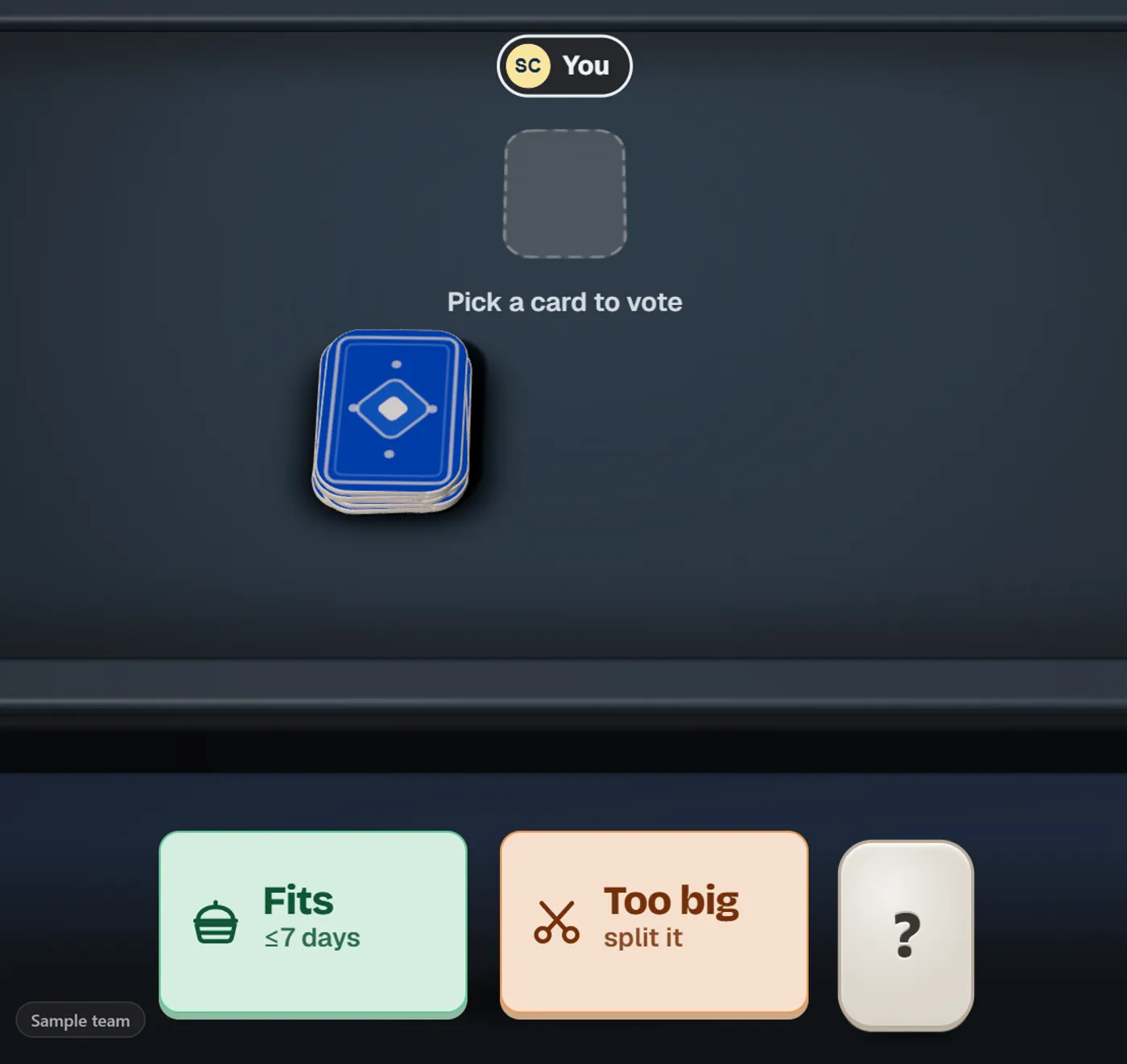 Previsión Kanban en Jira: fechas de entrega sin story points Cuenta los elementos de trabajo que tu equipo termina cada semana, repite esas semanas y responde con un rango, no una fecha. Sin puntos de historia, en Kanban.
-
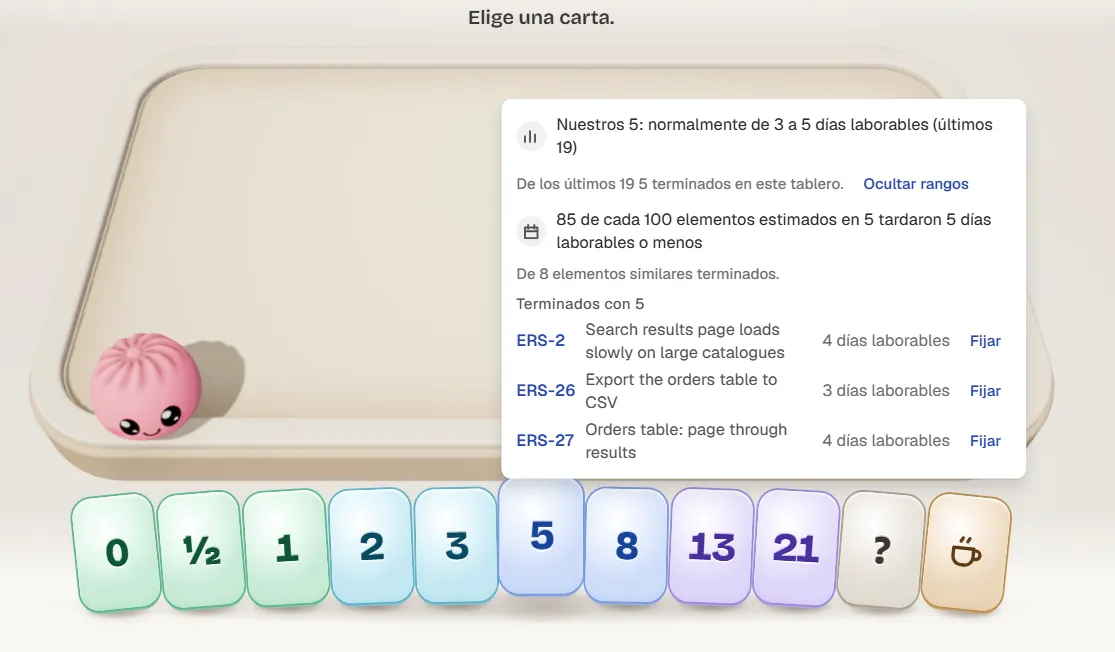 Puntos de historia explicados: Fibonacci, tallas de camiseta y qué significa un 5 Qué miden los puntos de historia, cuándo encajan Fibonacci o las tallas de camiseta y por qué un 5 solo significa algo si miras cuánto tardaron tus 5.
-
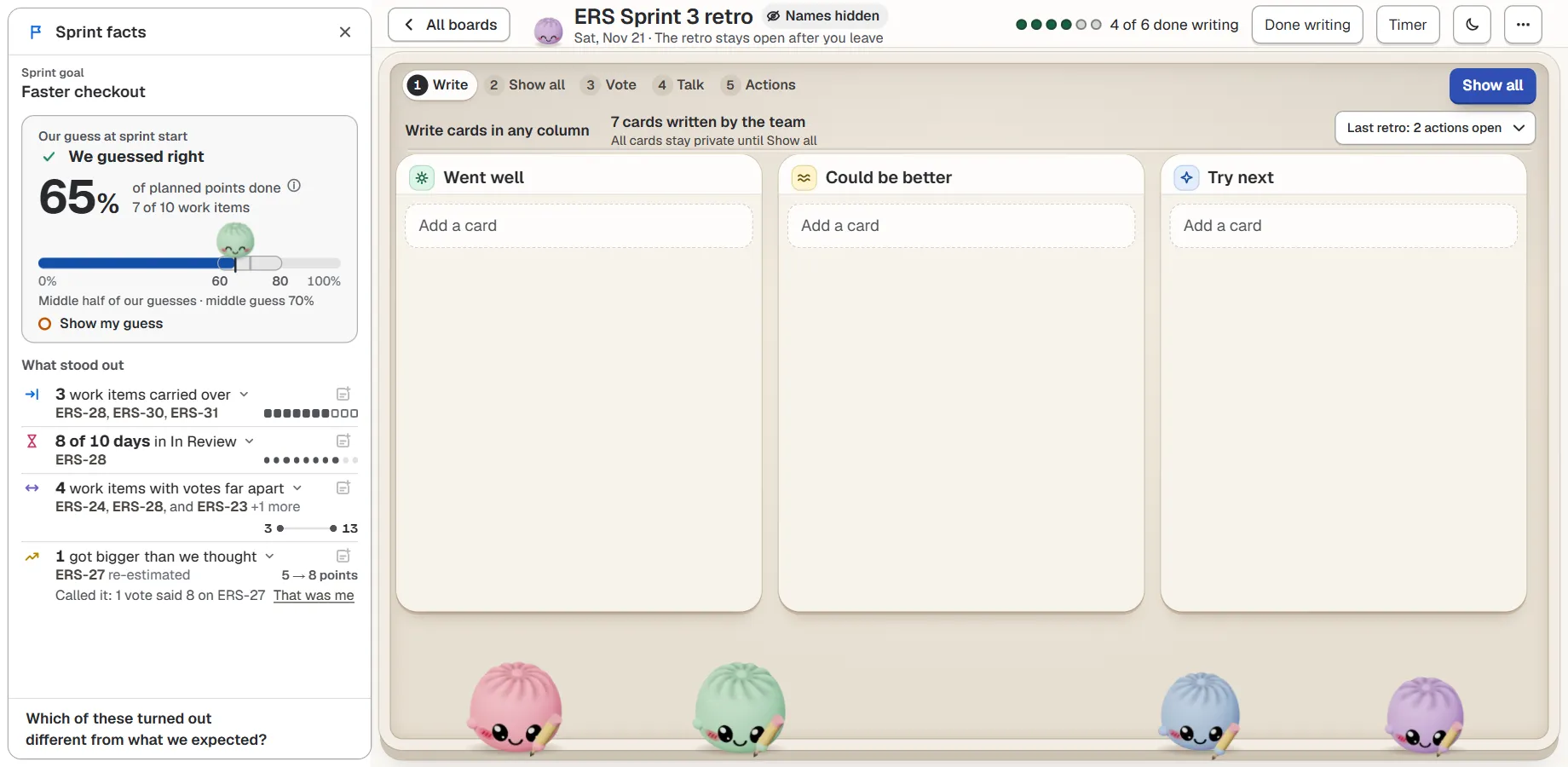 Retrospectiva de sprint en Jira: opciones integradas y apps Cómo hacer una retrospectiva de sprint en Jira: página y pizarra de Confluence, un tablero de elementos de trabajo y una app de retro, comparadas.
- Retrospectivas remotas e híbridas: tarjetas anónimas y respuestas honestas Retrospectiva online o híbrida con respuestas honestas: escribir a solas, tarjetas ocultas hasta estar todos listos, sin nombres y que hable primero la llamada.
-
 Sesgo de anclaje en la estimación ágil: gana el primer número, y cómo evitarlo Alguien dice 8 y de pronto todos piensan 8. Los vicios de la estimación detrás del anclaje, cómo detectarlos y cómo los votos ocultos arreglan los peores.
- Velocity o throughput para planificar el sprint en Jira La velocity suma estimaciones por sprint. El throughput cuenta elementos de trabajo terminados por semana. Qué dice cada una y cómo leerlas en Jira.
-
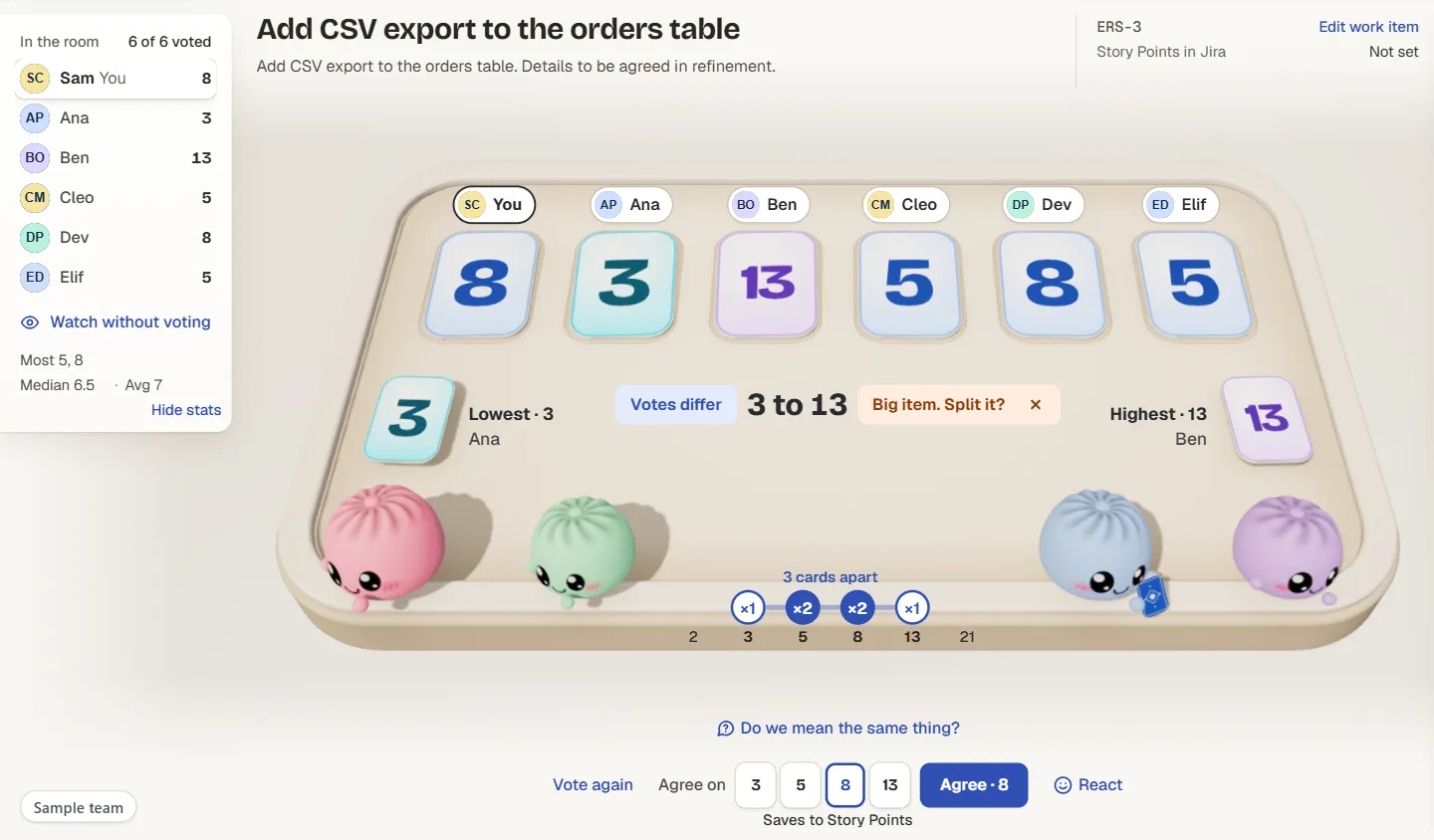 Votos 3 y 13: qué hacer cuando las estimaciones están muy separadas En planning poker, uno vota 3 y otro 13. Habla antes de votar de nuevo, pregunta primero a los extremos y divide el elemento de trabajo si la brecha sigue.
Otros artículos, en inglés
- Who is this Jira request waiting on? Another team's next stepWhen a Jira Service Management request is stuck on another team's task, here's how to find who has the next step, nudge them where they work, and follow up.
- Waiting time vs SLA time in Jira Service ManagementWhy a request can take 28 hours but show 4 hours on the SLA clock, and how to read waiting time and SLA time side by side without drawing the wrong conclusion.
- Customer follow-ups and auto-close in Jira Service ManagementSet up customer reminders in Jira Service Management that stop when the customer replies, plus a safe auto-close. Step by step with Automation, and an app option.
- Customer follow-up message templates for Jira Service ManagementEight copyable Jira Service Management messages: ask customers for missing details and files, follow up, give a last call, and brief colleagues internally.
- Monthly service review for Jira Service Management: agenda and templateRun a 30-minute monthly service review in Jira Service Management: which numbers to use, how to read them honestly, and how to leave with owners and dates.
- Being 85% sure: how confident forecasts work, in plain wordsWhat '8 in 10' or '85% sure' really means for a sprint or release date, how a forecast is built from your own history, and how to talk about it without a maths lecture.
- How to read the Jira velocity chart, and where it misleadsWhat the grey, green and black marks on Jira's velocity chart mean, how to read it as a range, and five places where it quietly gives the wrong impression.
- Story points, item counts or hours for forecasting in JiraWhich unit to forecast with in Jira: story points, a plain count of work items, or hours. What each is good at, how to test them side by side, and how to switch.
- The Jira sprint report explained: burndown, added work and what Done meansHow to read Jira's sprint report: the burndown lines, the asterisk on added work items, what counts as completed, and what the report cannot tell you.
- When will this epic or release be done? Forecasting dates in JiraWhat Jira's epic and release burndown show, a by-hand method that gives a range of dates, and how Bunlings Sprint Forecast puts a likely date on epics.
- Will we finish the sprint? Forecast it from your own history in JiraA simple way to answer 'will this sprint fit?' from your last ten sprints, by hand in Jira, and how Bunlings Sprint Forecast does the same replay for you.
- Work added and removed mid-sprint: what it does to your Jira numbersHow work that joins or leaves a sprint after it starts changes Jira's velocity chart, burndown and sprint report, and a simple way to keep your numbers honest.
- Are Jira guest users free? What counts and what doesn'tJira guests are free up to 5 per paid user on Standard, Premium and Enterprise. Who qualifies, what guests can do, why paid users can't be converted, and how to add one.
- Do service accounts and app users count as billable in Jira?Service accounts and the bot users apps create don't count toward your Jira user limit. An ordinary account you made for a script does. How to tell them apart.
- How to pause the SLA while waiting for the customer in Jira Service ManagementAdd a pause condition to a Jira Service Management SLA so the clock stops while you wait for the customer, and avoid the traps that keep it running or stuck.
- How to remind approvers in Jira Service Management when they don't respondRemind a Jira Service Management approver who has not decided: a scheduled Automation flow that tags them, the traps to avoid, and what to do when they are away.
- How to see who gave someone Jira access, and whenJira doesn't keep one 'given by' name. Find the group behind a person's access, then use the Jira and organization audit logs to see when, and where they fall short.
- How to track a Jira Service Management request that is waiting on a vendorA request is stuck at a supplier or other third party. Track the wait in Jira Service Management with a status, a promised date and a reminder, and see where it stops.
- Waiting for customer in Jira Service Management: what the status does and how to find stuck requestsWhat the Waiting for customer status does in Jira Service Management, what it leaves to you, and a saved search that finds requests stuck in it for days.
- Why your Jira Service Management agent count is higher than your agentsYour Jira Service Management license count is higher than the people who work on requests? Find every group that gives agent access, including admin groups, and fix it.
- Removed Jira users but the bill didn't go down? Here's whyWhy removing Jira users doesn't lower this month's bill: how maximum quantity billing and annual user tiers work, when the saving shows up, and what to check.
- How to change the owner of a filter or dashboard in Jira CloudChange a Jira filter or dashboard owner as an admin, find everything one person owns, and hand a leaver's filters over before the account is deleted.
- Atlassian's October 2026 price rise: what it means for your renewalOld and new Jira Cloud prices from Atlassian's own tables, when the 13 October 2026 rise reaches your bill, and when removing users really lowers it.
- Jira Service Management evidence handoff templateA copyable evidence handoff template for Jira Service Management requests, with a filled offboarding example, clear words for gaps and a readback test.
- Jira Service Management offboarding checklist for IT and HRAn offboarding checklist for IT and HR in Jira Service Management: who owns each step, where the proof lives, and how to record what nobody could check.
- Atlassian unique billable users explainedOne person counts once for Atlassian Guard, collections and Enterprise plans, but once per app on Standard and Premium. A worked example reconciles the numbers.
- How to check which groups give Jira accessSee which groups give people access to Jira in Atlassian Administration, which of them one person is in, and why one removal may not end their access.
- Jira billable users explained: who counts and how to checkWhat makes one person billable for Jira Cloud, who doesn't count, and how to check their access, every group behind it, and when removing it changes the bill.
- Suspend vs remove user access in AtlassianWhen to suspend, remove, deactivate or delete a user in Atlassian Cloud, and what each does to access, billing, groups, data and the way back.
- Why removing a user from a group did not remove Jira accessTaking someone out of one group often leaves Jira access in place, or it comes back. Every reason it survives, how to check each one, and how to confirm.
- How to find where a Jira group is usedJira has no single view of where a group is used. Here is every place to check by hand, from permission schemes and space roles to filters and Automation flows.
Seatwise está disponible en inglés, alemán y japonés. RequestOps está en inglés. Bunlings está disponible en diez idiomas, también en español.