Direct references
Detected dependencies are grouped by source so admins know what still depends on the group before delete, rename, replacement, or ownership cleanup.
 UnitlaneJira cleanup tools
Use the group view to inspect detected source objects, available derived permission paths, severity, and coverage.
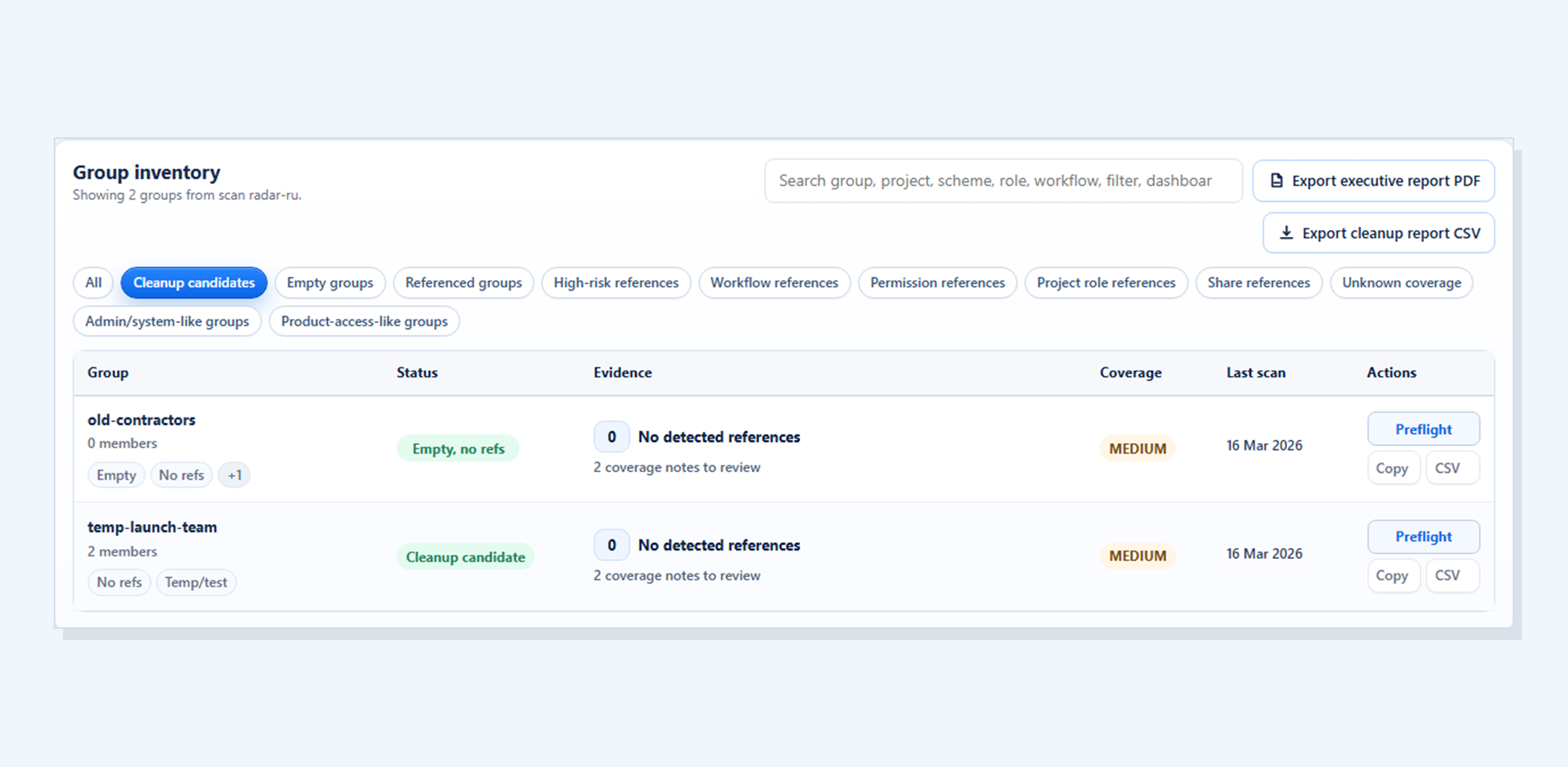
Group Cleanup Radar works backward from the selected group across supported Jira sources.
Detected dependencies are grouped by source so admins know what still depends on the group before delete, rename, replacement, or ownership cleanup.
This keeps the review practical: what to inspect, why it matters, and what should remain a manual check before any Jira cleanup decision.
High and medium findings help reviewers decide where to look first, especially when a group appears in permissions, shares, workflows, or other supported sources.
It does not change Jira.
Coverage limits stay visible so reviewers understand what still needs manual checking.
Partial coverage warns that some references may still require manual inspection, so the scan does not imply more certainty than the available data supports.
This keeps the review practical: what to inspect, why it matters, and what should remain a manual check before any Jira cleanup decision.
Continue to Group Cleanup Radar for Jira for the current screenshots, trust boundaries, docs, and Marketplace trial link behind this workflow.